Foot and Ankle Fractures: Broken Ankles, Broken Toes, and What to Do
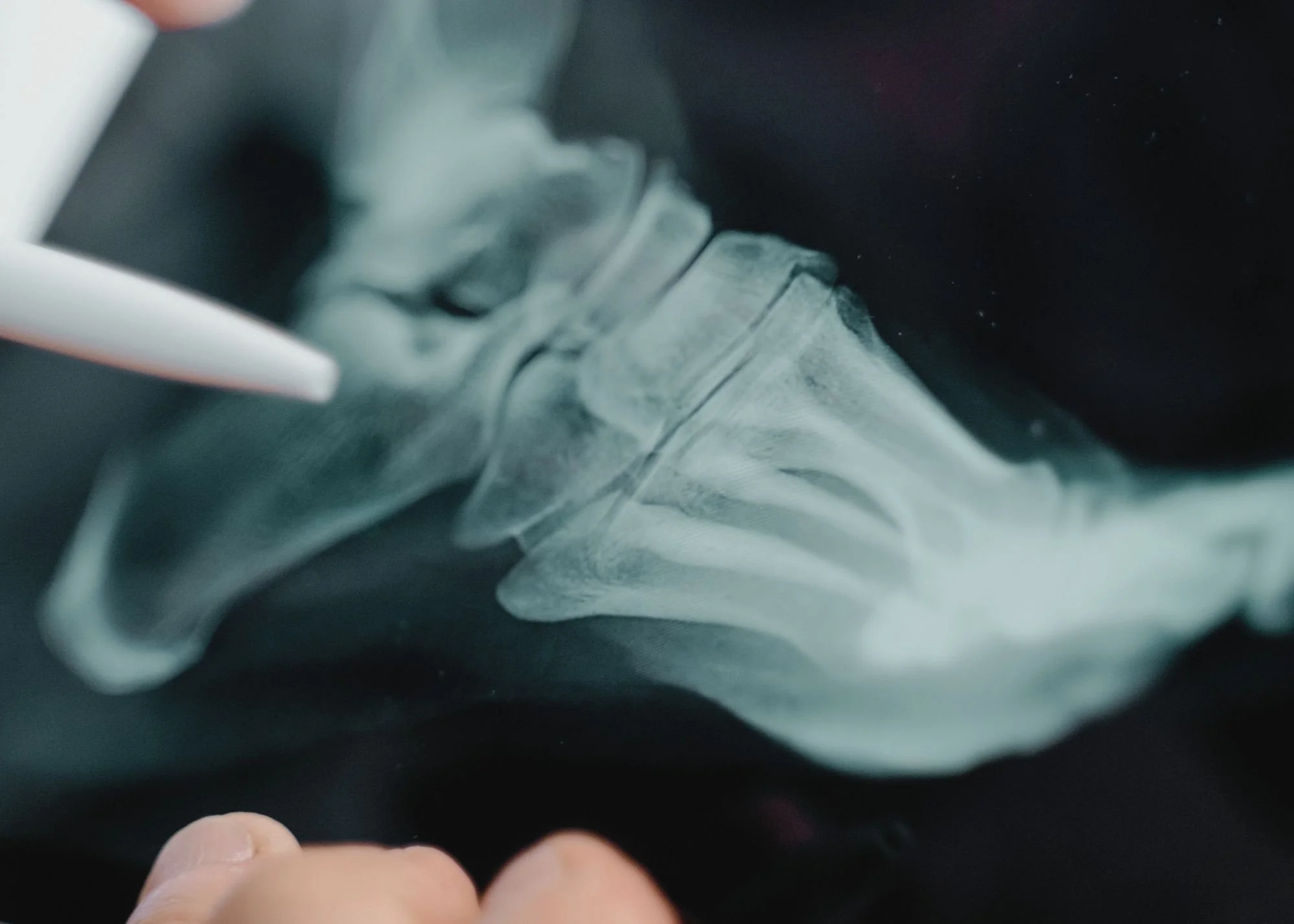
Foot and ankle fractures are among the most common bone injuries treated in podiatry. They happen everywhere — from the ski slopes of Eldora to the curb in front of your house — and they range from minor toe fractures that heal on their own to complex ankle breaks that require surgery and months of rehabilitation.
What complicates matters is that fractures don't always announce themselves clearly. People walk on broken bones for days or weeks, assuming the injury is "just a sprain" until the pain doesn't resolve. Knowing what to watch for — and when to seek care — makes a meaningful difference in outcomes.
Types of Foot and Ankle Fractures
The foot and ankle contain 28 bones, and any of them can fracture. The most common patterns:
Ankle Fractures
The ankle joint is formed by three bones: the tibia (shin), fibula (smaller bone on the outside of the lower leg), and talus (the bone of the foot that fits into the joint). Ankle fractures can involve any combination of these bones:
Lateral malleolus fracture: A break of the bony bump on the outside of the ankle (distal fibula). The most common type of ankle fracture.
Medial malleolus fracture: A break of the bony bump on the inside of the ankle (distal tibia).
Bimalleolar fracture: Both lateral and medial malleoli are broken. Almost always requires surgical fixation.
Trimalleolar fracture: Both malleoli plus the back of the tibia (posterior malleolus). The most severe ankle fracture pattern.
Pilon fracture: A high-energy fracture of the lower tibia from a fall or motor vehicle accident. Often complex and surgical.
Foot Fractures
Metatarsal fractures: Breaks in the long bones connecting the midfoot to the toes. The fifth metatarsal (Jones fracture or "dancer's fracture") is particularly common in athletes.
Stress fractures: Hairline cracks from repetitive impact, common in runners and military recruits. Most often occur in the metatarsals or calcaneus.
Calcaneus (heel bone) fractures: Usually result from falls from height. Can be complex and disabling.
Talus fractures: High-energy injuries that can be career-ending for athletes if not managed correctly.
Lisfranc injuries: Fractures or dislocations of the midfoot. Often missed initially and require precise treatment.
Toe Fractures
Toe fractures (phalangeal fractures) are extremely common — and often dismissed as "just a stubbed toe" when they're actually a true break:
Big toe fractures: More serious than fractures of the smaller toes because the big toe bears significant weight during walking and push-off. Often require careful management.
Lesser toe fractures: The four smaller toes. Most heal well with buddy taping (taping the broken toe to the adjacent healthy toe) and protective footwear.
Avulsion fractures: A small piece of bone is pulled off where a tendon or ligament attaches. Common at the base of the fifth metatarsal.
Common Causes
How fractures happen often points to the type of fracture and the right treatment approach:
Twisting injuries. Rolling the ankle while running on uneven ground, stepping off a curb wrong, or landing awkwardly from a jump. Most ankle fractures fall in this category.
Direct impact. Dropping something heavy on the foot, kicking a hard object, or stubbing a toe with significant force.
Falls from height. Causes calcaneus fractures and high-energy injuries that can affect multiple bones.
Repetitive stress. Stress fractures develop from accumulated impact, especially when training increases too quickly. Common in distance runners, dancers, and military recruits.
Sports-specific mechanisms. Skiing accidents (boot-top fractures, spiral tibia fractures), basketball landings, soccer kicks, climbing falls — each sport has its signature injuries.
Underlying bone weakness. Osteoporosis, vitamin D deficiency, certain medications, and metabolic conditions can increase fracture risk from minor injuries.
Symptoms: How to Tell a Fracture from a Sprain
This is the most common question podiatrists hear. Both ankle sprains and fractures cause pain, swelling, and difficulty walking. The differences:
Suggesting a Fracture
Severe pain that's often worse with weight-bearing
Inability to bear weight on the foot at all (a major red flag)
Visible deformity or angulation
Swelling that develops quickly and significantly
Bruising that's extensive or spreads to other areas of the foot
Tenderness directly over a bone, not just over soft tissue
A snapping or popping sensation at the moment of injury
Pain that doesn't improve over the first 24 hours
Suggesting a Sprain
Pain primarily in soft tissue rather than over bone
Ability to walk with a limp, even if uncomfortable
Swelling that develops more gradually
Bruising more localized to the side of the ankle
Mild to moderate pain that improves with RICE (rest, ice, compression, elevation)
The Ottawa Ankle Rules — used by emergency physicians — suggest that imaging should be obtained for any ankle injury where the patient cannot bear weight for four steps immediately after the injury and at the time of evaluation, or where there's tenderness directly over key bony landmarks. When in doubt, get imaging.
Diagnosis
Most fractures are diagnosed with X-ray imaging, which clearly shows displaced fractures. Some fractures — particularly stress fractures and certain Lisfranc injuries — don't appear on initial X-rays and may require:
Repeat X-rays after 1-2 weeks (when healing reactions become visible)
MRI for stress fractures and ligament injuries
CT scan for complex fractures requiring surgical planning
Bone scans for occult stress fractures
Many podiatry offices have in-house X-ray, allowing for same-day diagnosis when you walk in with an injury.
Treatment
Non-Surgical Treatment
Many fractures heal well without surgery:
Casting or walking boot to immobilize the area while bone heals
Crutches or a knee scooter for non-weight-bearing periods
Buddy taping for stable lesser toe fractures
Protective footwear (post-op shoe, fracture boot)
Activity modification and gradual return to weight-bearing
Pain management with anti-inflammatories (used judiciously)
Surgical Treatment
Some fractures require surgical fixation to heal correctly:
Displaced or unstable ankle fractures
Bimalleolar and trimalleolar fractures
Open fractures (where bone has broken through the skin)
Lisfranc injuries with significant displacement
Fractures involving joint surfaces with significant gaps
Failed conservative treatment
Certain Jones fractures (fifth metatarsal) in athletes
Modern fracture surgery uses small plates, screws, and fixation devices to restore alignment. Recovery typically involves weeks of non-weight-bearing followed by progressive return to activity over months.
Recovery Timeline
Recovery varies dramatically by injury:
Stable toe fractures: 3 to 6 weeks for bone healing; full activity in 6 to 8 weeks.
Most metatarsal fractures: 6 to 8 weeks of immobilization; full return to running in 10 to 12 weeks.
Stable ankle fractures: 6 to 8 weeks in a boot or cast; full recovery in 3 to 4 months.
Surgical ankle fractures: 6 to 12 weeks before weight-bearing; full recovery often 6 to 12 months.
Stress fractures: 6 to 8 weeks of relative rest; gradual return to running over 4 to 6 weeks after that.
Returning to activity too quickly is the most common cause of refracture or non-healing. Patience pays off.
When to See a Podiatrist Immediately
Seek same-day evaluation for:
Inability to bear weight on the foot
Visible deformity or bone protrusion
Numbness, tingling, or color changes in the foot or toes
Severe swelling that develops within minutes of injury
Pain that's severe and not relieved by rest, ice, and elevation
Open wounds at the injury site
Suspected stress fracture in a runner with persistent localized pain
At Table Mountain Foot and Ankle, we evaluate fractures every week — from weekend warriors to competitive athletes to senior patients with osteoporotic injuries. Schedule an appointment or, for serious injuries, head to urgent care or an emergency room and follow up with us for definitive management.