
services · plantar warts
Stubborn plantar warts have an answer they haven't tried.
Plantar warts — caused by HPV invading the skin of the foot — are notoriously difficult to treat. Many resolve on their own, but the ones that don't can persist for years despite over-the-counter treatments, salicylic acid, and even cryotherapy. SWIFT® Therapy offers a different approach for the warts that haven't budged.
Wheat Ridge
⛰
Boulder
⛰
Arvada
⛰
Lakewood
⛰
Golden
⛰
Edgewater
⛰
Louisville
⛰
Lafayette
⛰
Superior
⛰
Broomfield
⛰
Erie
⛰
Longmont
⛰
Wheat Ridge ⛰ Boulder ⛰ Arvada ⛰ Lakewood ⛰ Golden ⛰ Edgewater ⛰ Louisville ⛰ Lafayette ⛰ Superior ⛰ Broomfield ⛰ Erie ⛰ Longmont ⛰
About This Service
What plantar wart care actually involves.
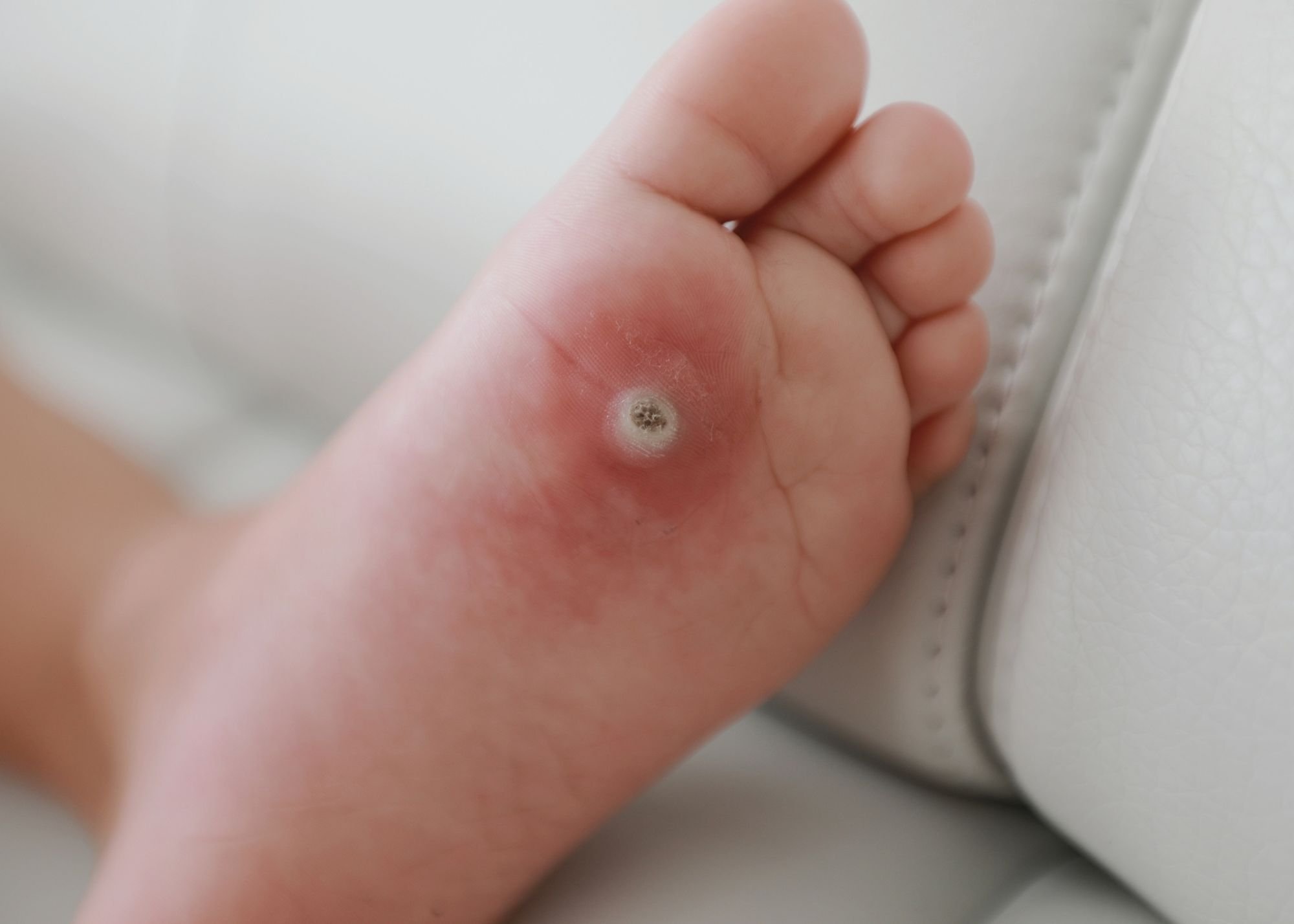
Plantar warts are skin growths caused by certain strains of the human papillomavirus (HPV). They typically appear on weight-bearing areas of the foot — the ball, heel, or other pressure points — and can be painful when walking. They're often confused with corns or calluses, but plantar warts have distinct features: tiny black dots (capillaries) within them, pain with side-to-side compression rather than direct pressure, and disruption of normal skin lines.
Many plantar warts resolve spontaneously over months or years as the immune system clears the virus. Those that persist warrant treatment, particularly when painful, multiplying, or affecting daily activities. Effective treatment ranges from over-the-counter and prescription topicals to in-office procedures to advanced therapies like SWIFT for resistant cases.
WHAT'S INCLUDED IN THIS SERVICE
— Accurate diagnosis. Differentiating plantar warts from corns, calluses, and other foot lesions that look similar but require different treatment.
— Standard treatments. Salicylic acid debridement, cryotherapy, prescription topicals, or excision when appropriate.
— SWIFT. Advanced microwave-based treatment that triggers an immune response against the wart virus — particularly effective for stubborn cases.
— Multiple wart management. Coordinated treatment when multiple warts are present or recurring.
Who This Is For
Most patients seeking professional plantar wart care have already tried multiple over-the-counter treatments — salicylic acid pads, freezing kits, duct tape — without success. Standard medical treatments like in-office cryotherapy and prescription topicals work for many cases, but resistant warts require more advanced approaches.
SWIFT is one of the most effective treatments for resistant plantar warts. The treatment uses targeted microwave energy to heat the wart tissue, triggering an immune response that helps the body clear the virus. SWIFT is particularly valuable for warts that haven't responded to standard treatments, mosaic warts (clusters of small warts), and warts that have persisted for years.
Built for the patients who've tried everything else.
For active patients, plantar warts on weight-bearing areas can significantly affect running, hiking, and athletic performance. Coordinated treatment minimizes downtime and addresses the warts before they spread or worsen with continued pressure.
For diabetic patients and those with compromised immune systems, plantar warts warrant prompt evaluation. The skin breakdown they create can lead to bacterial superinfection, and impaired immune function makes spontaneous resolution less likely.
CONDITIONS AND CONCERNS WE ADDRESS
— Cryotherapy (Freezing)
— Salicylic Acid Treatment
— Prescription Topicals
— Surgical Excision (Rare Cases)

Voted Best Podiatrist in the Best of Mile High — three years running.
RECOGNITION
We've been honored to be voted Best Podiatrist in the Best of Mile High in 2023, 2024, and 2025, and we've been named a Neighborhood Fave by Nextdoor. We've also earned a 4.8-star rating from more than 1,300 patients across our two offices. We mention this because we're proud of it — but also because those ratings are built one visit at a time, by real patients who took the time to say something. We don't take that lightly.
🏆 Best of Mile High 2023
🏆 Best of Mile High 2024
🏆 Best of Mile High 2025
⭐ Nextdoor Neighborhood Fave
how it works
Three steps to walking without pain again.
The path from your first phone call to lasting relief is simpler than most patients expect — and we'll walk you through every part of it.
STEP 1
Call to schedule
Pick the office that's most convenient — Wheat Ridge or Boulder — and call to book. New patients are always welcome, and most insurance plans are accepted.
01
STEP 2
Come in for a thoughtful evaluation
Your first visit is a conversation, not a conveyor belt. We listen to your history, examine what's going on, and use in-office digital X-rays or musculoskeletal ultrasound if we need a closer look.
02
STEP 3
Start a plan built around you
You'll leave understanding your condition, your options, and exactly what the next step looks like. No pressure, no upsell — just steady care.
03
Related Resources
Keep reading from our patient education library.
Related service
Athlete's foot
HPV and fungal infections both compromise foot skin. Addressing one often involves attention to the other.
Blog · Footwear
Arch support & running shoes: a guide for active Coloradans
Pressure from poor-fitting shoes can worsen plantar warts on weight-bearing areas.
Advanced Treatment
SWIFT
Advanced microwave-based treatment for stubborn plantar warts that haven't responded to standard therapies.
Blog · Self-Care
Foot exercises for strong, pain-free feet
Daily foot care habits that support healthy skin.
Related service
Corns
Plantar warts are often confused with corns. Accurate diagnosis is essential because the treatments are entirely different.
Blog · Diabetic
Diabetic foot care: why it's different and what to watch for
Why plantar warts warrant attention in diabetic patients.
ANSWERS TO COMMON QUESTIONS
What patients ask about plantar warts.
-
Plantar warts have tiny black dots (small clotted capillaries) within them, disrupt normal skin lines, and hurt with side-to-side compression. Calluses are smoother, follow the natural skin lines, lack black dots, and hurt with direct pressure rather than pinching.
Accurate identification matters because the treatments are entirely different. Calluses respond to addressing the underlying mechanical cause — pressure points, footwear, structural issues. Plantar warts are caused by HPV and require treatments that target the virus. Patients who treat a plantar wart as a callus often see it grow larger and spread, while those who treat a callus as a wart can damage healthy skin without addressing the actual cause.
-
SWIFT is highly effective for plantar warts, including stubborn cases that haven't responded to other treatments. Clinical studies show success rates around 75 to 80 percent, with many warts cleared in 3 to 4 sessions spaced 4 weeks apart. The treatment is particularly valuable for warts that have persisted for years.
Unlike treatments that try to physically destroy the wart tissue, SWIFT works by triggering an immune response against the wart virus. The body's immune system then clears the wart from the inside out. This approach is particularly effective for resistant cases because previous unsuccessful treatments don't reduce SWIFT's effectiveness — and for some patients, SWIFT clears multiple warts even though only one was directly treated, because the immune response targets all wart tissue.
-
Many plantar warts do resolve spontaneously as the immune system clears the virus, but this can take months to years. Pediatric warts often resolve faster than adult warts. Persistent warts that haven't resolved after a year of conservative management, painful warts, multiplying warts, or warts in immunocompromised patients warrant active treatment.
The decision to treat or wait depends on individual circumstances. Painful warts affecting daily activities should be treated. Cosmetic warts in healthy children sometimes resolve faster with patience than with aggressive treatment. Warts that are growing, spreading to new areas, or persisting beyond a year typically need intervention. Active patients dealing with warts on weight-bearing areas usually benefit from prompt treatment.
-
Yes, plantar warts are caused by HPV strains that can spread through direct contact and contact with contaminated surfaces — locker room floors, public showers, pool decks, shared towels. The virus thrives in warm, moist environments. However, transmission requires both exposure and a small skin break that allows the virus to enter.
Practical prevention strategies include keeping feet dry, wearing shower shoes in public moist areas, avoiding shared footwear and towels, treating known warts promptly to reduce shedding, and addressing any skin breaks or cuts on the feet quickly. Within households, transmission can occur but isn't inevitable. Patients with active warts should avoid going barefoot in shared spaces and should not share footwear with family members.
-
Insurance coverage for plantar wart treatment varies. Standard treatments like cryotherapy and prescription medications are typically covered. SWIFT microwave therapy is sometimes considered cosmetic or experimental and may not be covered by all plans. Table Mountain Foot & Ankle accepts most major insurance plans, Medicare, and workers' compensation.
Coverage often depends on whether the warts are causing pain or functional limitations versus cosmetic concerns. Our front office team verifies your specific benefits before treatment so there are no surprises about what's covered. For SWIFT therapy specifically, we discuss any out-of-pocket costs upfront so you can make an informed decision.

READY WHEN YOU ARE
Call to schedule your visit.
We see patients from across the Denver metro area at our Wheat Ridge and Boulder offices. Both locations are accepting new patients, and both offer free parking. Call whichever office is most convenient — we'll take it from there.