
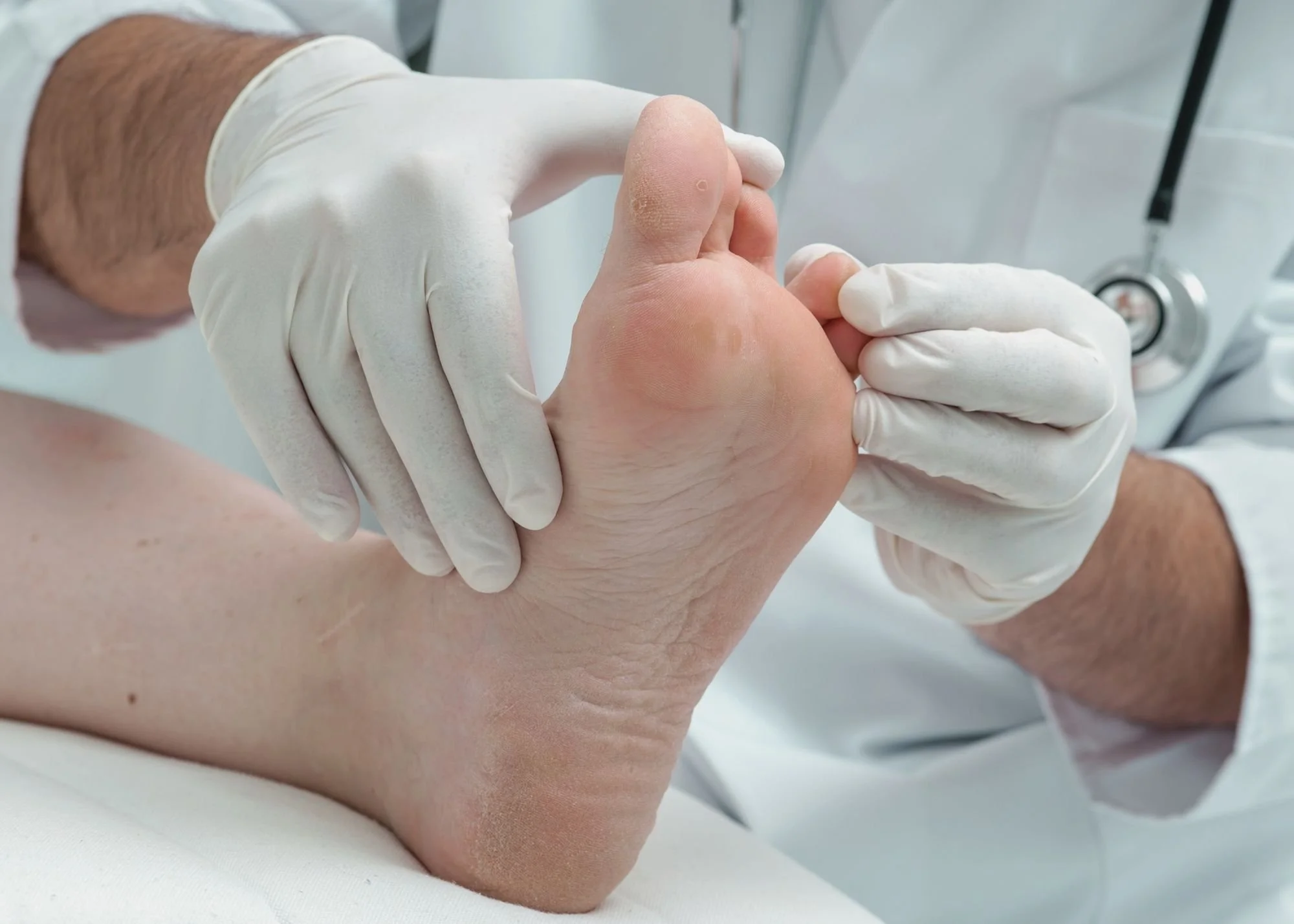
services · athlete’s foot
When over-the-counter treatment isn't working, get a real diagnosis.
Athlete's foot — the itchy, scaly, sometimes blistering fungal infection that affects the skin of the feet — is one of the most common skin conditions we treat. Most cases respond to drugstore antifungals, but the ones that don't are often misdiagnosed. Knowing when to get professional care saves weeks of frustration.
Wheat Ridge
⛰
Boulder
⛰
Arvada
⛰
Lakewood
⛰
Golden
⛰
Edgewater
⛰
Louisville
⛰
Lafayette
⛰
Superior
⛰
Broomfield
⛰
Erie
⛰
Longmont
⛰
Wheat Ridge ⛰ Boulder ⛰ Arvada ⛰ Lakewood ⛰ Golden ⛰ Edgewater ⛰ Louisville ⛰ Lafayette ⛰ Superior ⛰ Broomfield ⛰ Erie ⛰ Longmont ⛰
About This Service
What athlete's foot care actually involves.
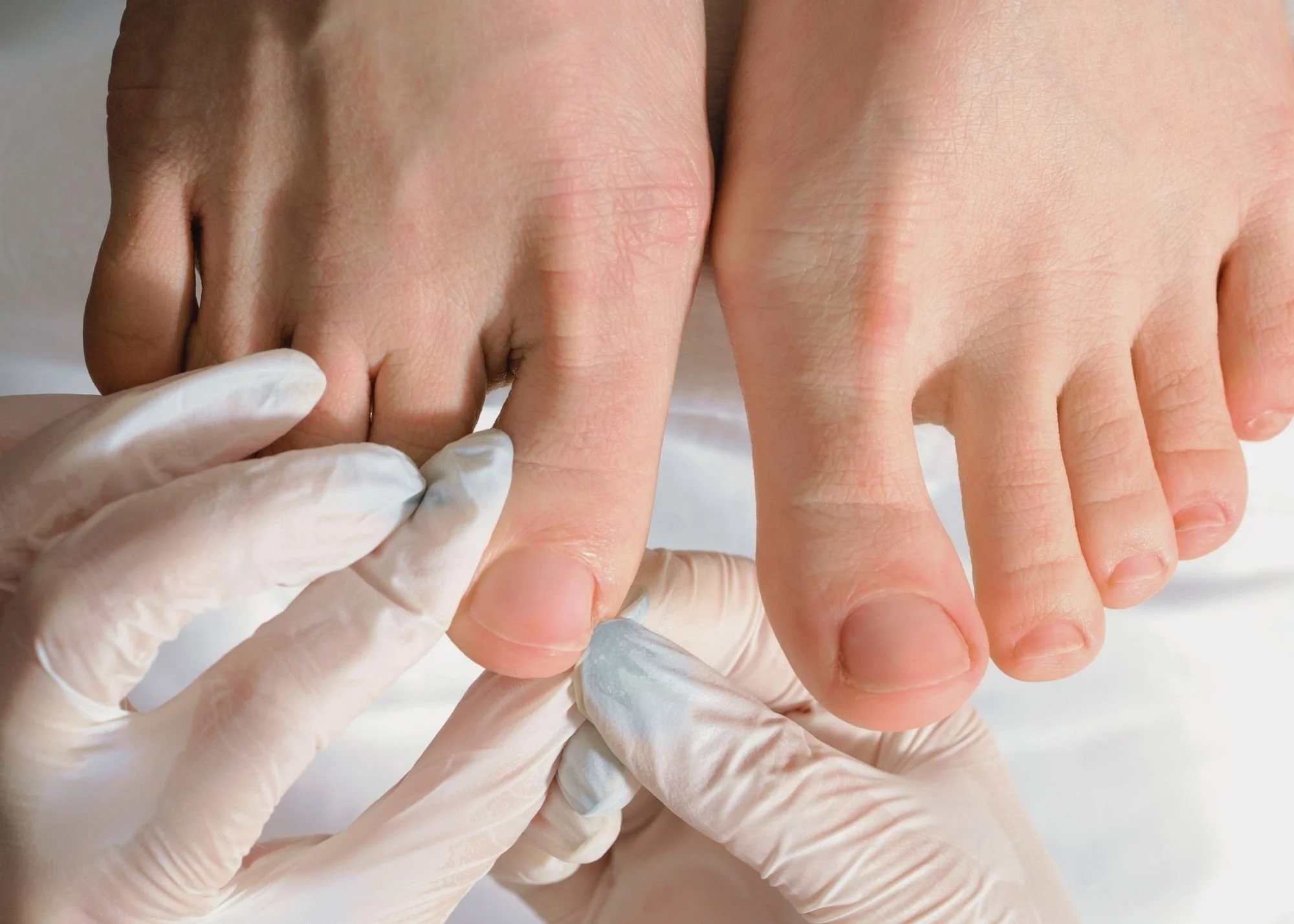
Athlete's foot (tinea pedis) is a fungal infection of the skin caused by the same family of organisms that produce fungal toenails, jock itch, and ringworm. It thrives in warm, moist environments — sweaty shoes, locker room floors, public showers — and spreads easily.
What we provide goes beyond what you'd get from over-the-counter treatment. When a fungal infection has lasted weeks or months, become resistant to drugstore antifungals, or doesn't quite look like typical athlete's foot, we evaluate for the actual cause. Many "chronic athlete's foot" cases turn out to be eczema, contact dermatitis, or psoriasis that needs different treatment entirely.
WHAT'S INCLUDED IN THIS SERVICE
— Accurate diagnosis. Skin scraping, KOH testing, or culture when warranted to confirm the actual cause of the rash.
— Prescription antifungals. Topical or oral medications stronger than what's available over the counter.
— Differential evaluation. Assessment for non-fungal conditions (eczema, dermatitis, psoriasis) that mimic athlete's foot.
— Recurrence prevention. Practical strategies to prevent reinfection — footwear hygiene, moisture control, environmental factors.
Who This Is For
Most patients come to us after over-the-counter treatments haven't worked. Drugstore antifungals are effective for typical mild cases, but stubborn or atypical cases often need prescription medications, accurate identification of the actual cause, or both.
If your athlete's foot has lasted more than a few weeks of consistent treatment, keeps coming back after clearing, doesn't look quite like the typical pattern, or comes with unusual symptoms — that's when professional evaluation matters.
Built for the people whose athlete's foot won't quit.
For diabetic patients and those with compromised circulation, even mild athlete's foot warrants careful management. Skin breakdown from fungal infections can lead to bacterial superinfection and serious complications in vulnerable patients.
Patients with concurrent fungal toenails benefit from coordinated treatment of both conditions, since the toenails serve as a fungal reservoir that reinfects the skin if not addressed.
CONDITIONS AND CONCERNS WE ADDRESS
— Chronic Athlete's Foot
— Suspected Misdiagnosis

Voted Best Podiatrist in the Best of Mile High — three years running.
RECOGNITION
We've been honored to be voted Best Podiatrist in the Best of Mile High in 2023, 2024, and 2025, and we've been named a Neighborhood Fave by Nextdoor. We've also earned a 4.8-star rating from more than 1,300 patients across our two offices. We mention this because we're proud of it — but also because those ratings are built one visit at a time, by real patients who took the time to say something. We don't take that lightly.
🏆 Best of Mile High 2023
🏆 Best of Mile High 2024
🏆 Best of Mile High 2025
⭐ Nextdoor Neighborhood Fave
how it works
Three steps to walking without pain again.
The path from your first phone call to lasting relief is simpler than most patients expect — and we'll walk you through every part of it.
STEP 1
Call to schedule
Pick the office that's most convenient — Wheat Ridge or Boulder — and call to book. New patients are always welcome, and most insurance plans are accepted.
01
STEP 2
Come in for a thoughtful evaluation
Your first visit is a conversation, not a conveyor belt. We listen to your history, examine what's going on, and use in-office digital X-rays if we need a closer look.
02
STEP 3
Start a plan built around you
You'll leave understanding your condition, your options, and exactly what the next step looks like. No pressure, no upsell — just steady care.
03
Related Resources
Keep reading from our patient education library.
Related service
Plantar warts
Plantar warts can mimic athlete's foot but require entirely different treatment. Here's how to tell them apart.
Blog · Footwear
Arch support & running shoes: a guide for active Coloradans
Sweaty athletic footwear is one of the leading causes of recurrent athlete's foot.
Advanced Treatment
Laser therapy for nails
When fungal toenails are driving recurrent athlete's foot, laser therapy provides targeted treatment.
Blog · Self-Care
Foot exercises for strong, pain-free feet
Daily foot care habits that prevent skin and nail issues from developing.
Related service
Fungal toenails
Athlete's foot and toenail fungus often coexist. Treating both at the same time prevents reinfection.
Blog · Diabetic
Diabetic foot care: why it's different and what to watch for
For diabetic patients, even mild skin issues warrant careful attention.
ANSWERS TO COMMON QUESTIONS
What patients ask about athlete's foot.
-
See a podiatrist for athlete's foot that has lasted more than 2 to 4 weeks of consistent over-the-counter treatment, that keeps coming back after clearing, that involves blistering or significant skin breakdown, or that occurs in patients with diabetes or compromised circulation.
Most mild athlete's foot responds to drugstore antifungal creams used consistently for the recommended duration. The cases that need professional care are those that don't fit the typical pattern, that resist standard treatment, or that occur in patients with conditions that make skin infections more dangerous. If you've been managing recurrent athlete's foot for months, professional evaluation often identifies the underlying issue.
-
Recurrent athlete's foot typically indicates an ongoing source of reinfection — fungal toenails serving as a reservoir, contaminated footwear, environmental exposure (locker rooms, pools), excessive foot moisture, or compromised skin barrier. Effective treatment addresses both the active infection and the source.
Patients with concurrent fungal toenails are particularly prone to recurrence because the nails reinfect the skin even after the skin clears. Comprehensive treatment of both conditions — sometimes including laser therapy for nails — breaks the cycle. Other contributors include consistently sweaty feet, sharing footwear, walking barefoot in public moist areas, and certain medical conditions that compromise immune response.
-
Yes, athlete's foot is contagious and spreads through direct skin contact and contact with contaminated surfaces — locker room floors, public showers, pool decks, shared footwear, and shared towels. The fungus thrives in warm, moist environments, which is why these areas are common transmission sites.
Within households, transmission is common but not inevitable. Practical prevention strategies include keeping feet dry, avoiding shared footwear, wearing shower shoes in public moist areas, treating known infections promptly, and washing socks and bedding in hot water. For active patients who frequent gyms, pools, or shared athletic facilities, these precautions matter even more.
-
Yes — untreated athlete's foot can cause skin breakdown that allows bacterial superinfection, particularly in patients with diabetes or compromised circulation. The fungus can also spread to fingernails, toenails, and other skin areas, and serves as a reservoir for recurrent infection in untreated household members.
For diabetic patients, this is one of the reasons even mild athlete's foot warrants professional evaluation. Bacterial superinfection in a diabetic foot can progress rapidly to cellulitis or worse. For non-diabetic patients, the bigger concern is usually expansion to fungal toenails, which are dramatically harder to treat than the original skin infection. Early treatment of skin issues prevents larger problems.
-
Yes, most major insurance plans cover athlete's foot evaluation and treatment, including office visits, diagnostic testing, and prescription medications. Table Mountain Foot & Ankle accepts most major insurance plans, Medicare, and workers' compensation.
Coverage for advanced treatments like laser therapy for fungal toenails varies — these are sometimes considered cosmetic and not covered. Our front office team verifies your specific benefits before your appointment. Most prescription antifungal medications are covered with standard prescription drug coverage.

READY WHEN YOU ARE
Call to schedule your visit.
We see patients from across the Denver metro area at our Wheat Ridge and Boulder offices. Both locations are accepting new patients, and both offer free parking. Call whichever office is most convenient — we'll take it from there.