
services · ingrown toenails
Same-day relief for the toe that's ruining your day.
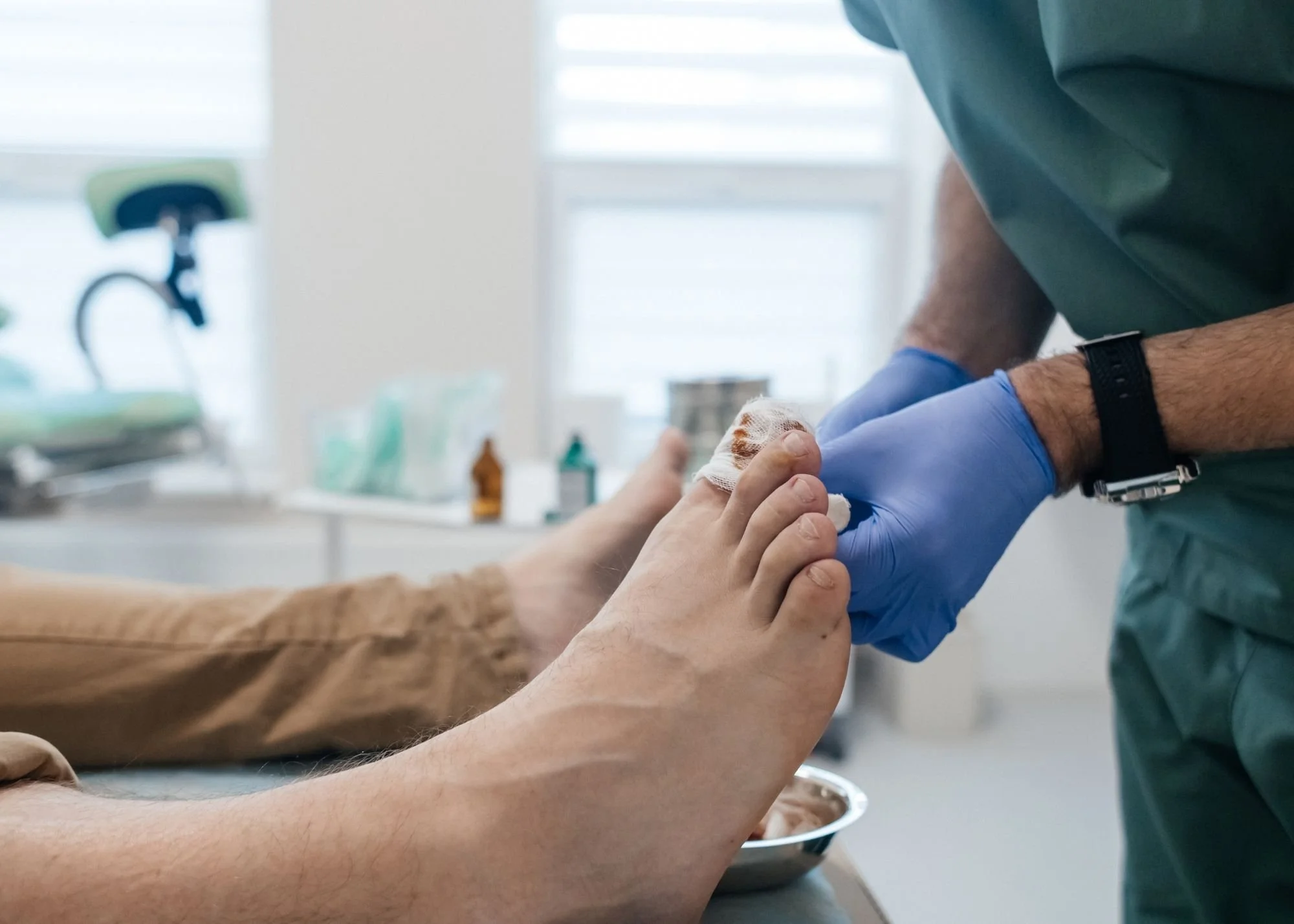
Ingrown toenails — when the edge of a nail grows into the surrounding skin — cause some of the most disproportionate pain we see in podiatry. A good toenail edge can ruin your week. The good news: same-day treatment is highly effective, and recurring ingrown nails have permanent solutions.
Wheat Ridge
⛰
Boulder
⛰
Arvada
⛰
Lakewood
⛰
Golden
⛰
Edgewater
⛰
Louisville
⛰
Lafayette
⛰
Superior
⛰
Broomfield
⛰
Erie
⛰
Longmont
⛰
Wheat Ridge ⛰ Boulder ⛰ Arvada ⛰ Lakewood ⛰ Golden ⛰ Edgewater ⛰ Louisville ⛰ Lafayette ⛰ Superior ⛰ Broomfield ⛰ Erie ⛰ Longmont ⛰
About This Service
What ingrown toenail care actually involves.
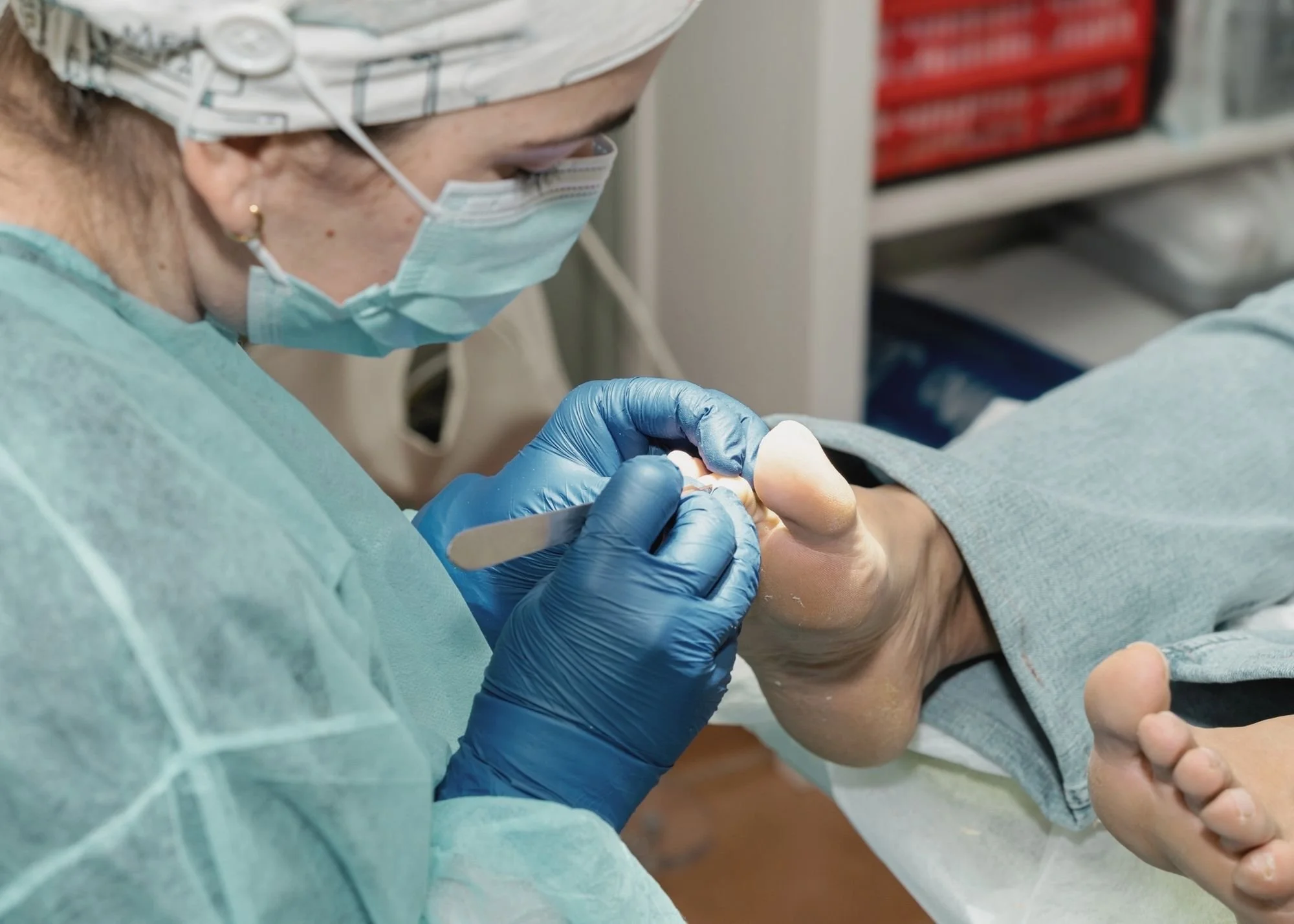
An ingrown toenail (onychocryptosis) develops when the edge or corner of a toenail grows into the surrounding soft tissue, causing pain, swelling, redness, and often infection. The big toe is most commonly affected, but any toe can develop the problem. Causes include improper nail trimming, tight footwear, trauma, and inherited nail shapes that predispose to ingrowth.
Effective treatment depends on severity. Acute cases — where the nail edge has just started growing into the skin — often respond to conservative measures: warm soaks, careful nail elevation, and topical care. More established cases require partial or complete nail removal to address the embedded edge. Recurrent cases benefit from permanent matrix treatment to prevent the affected nail edge from regrowing.
WHAT'S INCLUDED IN THIS SERVICE
— Same-day relief. Most acute ingrown toenails can be treated immediately during your first visit.
— Partial nail avulsion. Removal of just the offending edge of the nail, preserving the rest.
— Permanent matrix ablation. For recurring cases, a procedure that prevents the offending nail edge from regrowing.
— Infection management. Antibiotic treatment when warranted for ingrown nails with secondary bacterial infection.
Who This Is For
Patients seek ingrown toenail care for two distinct reasons: acute pain that needs immediate relief, or chronic recurrence that needs a permanent solution. Both are highly treatable, but the approaches differ.
For acute ingrown nails, same-day treatment in the office provides immediate relief. We perform partial nail avulsion under local anesthesia — removing just the offending edge of the nail. Most patients walk out feeling dramatically better than when they walked in. Healing takes 1 to 2 weeks.
Built for the people who keep dealing with the same toe.
For recurring ingrown nails — patients who've had the same problem on the same toe multiple times — permanent matrix ablation prevents the affected portion of the nail from ever regrowing. The procedure has high success rates and breaks the cycle of recurrent problems. Most patients wish they'd done it years earlier.
For diabetic patients and those with compromised circulation, ingrown toenails are never something to manage at home. The infection risk is too high, and home treatment can lead to serious complications. Professional care is essential.
CONDITIONS AND CONCERNS WE ADDRESS
— Acute Ingrown Toenail
— Recurring Ingrown Nails
— Infected Ingrown Toenails

Voted Best Podiatrist in the Best of Mile High — three years running.
RECOGNITION
We've been honored to be voted Best Podiatrist in the Best of Mile High in 2023, 2024, and 2025, and we've been named a Neighborhood Fave by Nextdoor. We've also earned a 4.8-star rating from more than 1,300 patients across our two offices. We mention this because we're proud of it — but also because those ratings are built one visit at a time, by real patients who took the time to say something. We don't take that lightly.
🏆 Best of Mile High 2023
🏆 Best of Mile High 2024
🏆 Best of Mile High 2025
⭐ Nextdoor Neighborhood Fave
how it works
Three steps to walking without pain again.
The path from your first phone call to lasting relief is simpler than most patients expect — and we'll walk you through every part of it.
STEP 1
Call to schedule
Pick the office that's most convenient — Wheat Ridge or Boulder — and call to book. New patients are always welcome, and most insurance plans are accepted.
01
STEP 2
Come in for a thoughtful evaluation
Your first visit is a conversation, not a conveyor belt. We listen to your history, examine what's going on, and use in-office digital X-rays or musculoskeletal ultrasound if we need a closer look.
02
STEP 3
Start a plan built around you
You'll leave understanding your condition, your options, and exactly what the next step looks like. No pressure, no upsell — just steady care.
03
Related Resources
Keep reading from our patient education library.
treatment service
Foot & ankle surgery
When permanent matrix ablation is the right answer, our team performs the procedure regularly with excellent outcomes.
Blog · Footwear
Arch support & running shoes: a guide for active Coloradans
Tight athletic footwear contributes to ingrown toenail development.
diabetic care
Diabetic foot care
For diabetic patients, ingrown toenails warrant prompt professional care to prevent serious complications.
Blog · Self-Care
Foot exercises for strong, pain-free feet
Daily foot care habits including proper nail trimming technique.
Related service
Fungal toenails
Fungal nail infections often coexist with ingrown nails. Treating both together prevents complications.
Blog · care
Diabetic foot care: why it's different and what to watch for
Why ingrown nails warrant special attention in diabetic patients.
ANSWERS TO COMMON QUESTIONS
What patients ask about ingrown toenails.
-
Most acute ingrown toenails can be treated in a single office visit, often the same day or next day for urgent cases. Treatment under local anesthesia takes 15 to 30 minutes, and most patients experience immediate, dramatic relief. Healing of the surrounding tissue takes 1 to 2 weeks.
If you have an ingrown toenail that's significantly painful, infected, or interfering with sleep or daily activities, don't wait. Call either office and let the front desk know it's an acute issue — we accommodate same-day appointments whenever possible. Patients who wait often develop secondary infections that complicate treatment and extend recovery.
-
Mild ingrown toenails can sometimes be managed at home with warm salt-water soaks, careful elevation of the nail edge with sterile cotton, antibiotic ointment, and properly fitting shoes. However, infected ingrown nails, severely painful cases, recurring problems, or any ingrown nail in a diabetic patient should be treated professionally.
Common home remedies that don't work or can cause harm include cutting a V-notch in the nail (an ineffective myth), aggressive nail trimming or digging that can worsen the ingrowth, and ignoring signs of infection. If a few days of conservative home care don't produce improvement, seek professional treatment rather than continuing to manage it yourself.
-
About 50 to 70 percent of ingrown toenails treated with simple removal will recur because the underlying nail shape that caused the problem regrows. For recurring cases, permanent matrix ablation has success rates above 90 percent — the procedure prevents the affected nail edge from regrowing, breaking the cycle.
Patients who've had ingrown toenails on the same toe multiple times are excellent candidates for permanent matrix ablation. The procedure takes only slightly longer than simple removal but produces dramatically more durable results. Most patients who get it done wish they'd had the procedure years earlier rather than dealing with repeat episodes of the same problem.
-
Ingrown toenail procedures are typically performed in the office under local anesthesia. Partial nail avulsion removes just the offending edge of the nail, taking 15 to 30 minutes. Permanent matrix ablation adds 5 to 10 minutes to apply a chemical solution that prevents the treated nail portion from regrowing. Most patients walk out and resume normal activities within 1 to 2 days.
The procedure is significantly less involved than the word "surgery" suggests. There's no general anesthesia, no hospital stay, and minimal post-op restrictions — most patients return to work the next day. Pain is generally mild and well-controlled with over-the-counter pain medication. The treated nail edge will be permanently absent (typically about 1 to 2 millimeters) but cosmetically the nail looks essentially normal once healed.
-
Yes, most major insurance plans cover ingrown toenail treatment, including office visits, partial nail avulsion, and permanent matrix ablation. Treatment is considered medically necessary when the ingrown nail is causing pain, infection, or functional limitations. Table Mountain Foot & Ankle accepts most major insurance plans, Medicare, and workers' compensation.
Coverage typically includes the procedure itself, anesthesia, and follow-up visits. Our front office team verifies your specific benefits before treatment so there are no surprises. For workers' comp injuries that resulted in ingrown toenails (often from steel-toed boots), we coordinate directly with your employer and adjuster.

READY WHEN YOU ARE
Call to schedule your visit.
We see patients from across the Denver metro area at our Wheat Ridge and Boulder offices. Both locations are accepting new patients, and both offer free parking. Call whichever office is most convenient — we'll take it from there.