

services · geriatric foot care
Foot care for older adults isn't optional. It's foundational.
For older adults, foot health is directly tied to mobility, independence, and quality of life. Comprehensive geriatric foot care prevents falls, addresses age-related foot conditions, manages chronic issues, and protects the foot health that supports everything else.
Wheat Ridge
⛰
Boulder
⛰
Arvada
⛰
Lakewood
⛰
Golden
⛰
Edgewater
⛰
Louisville
⛰
Lafayette
⛰
Superior
⛰
Broomfield
⛰
Erie
⛰
Longmont
⛰
Wheat Ridge ⛰ Boulder ⛰ Arvada ⛰ Lakewood ⛰ Golden ⛰ Edgewater ⛰ Louisville ⛰ Lafayette ⛰ Superior ⛰ Broomfield ⛰ Erie ⛰ Longmont ⛰
About This Service
What geriatric foot care actually involves.
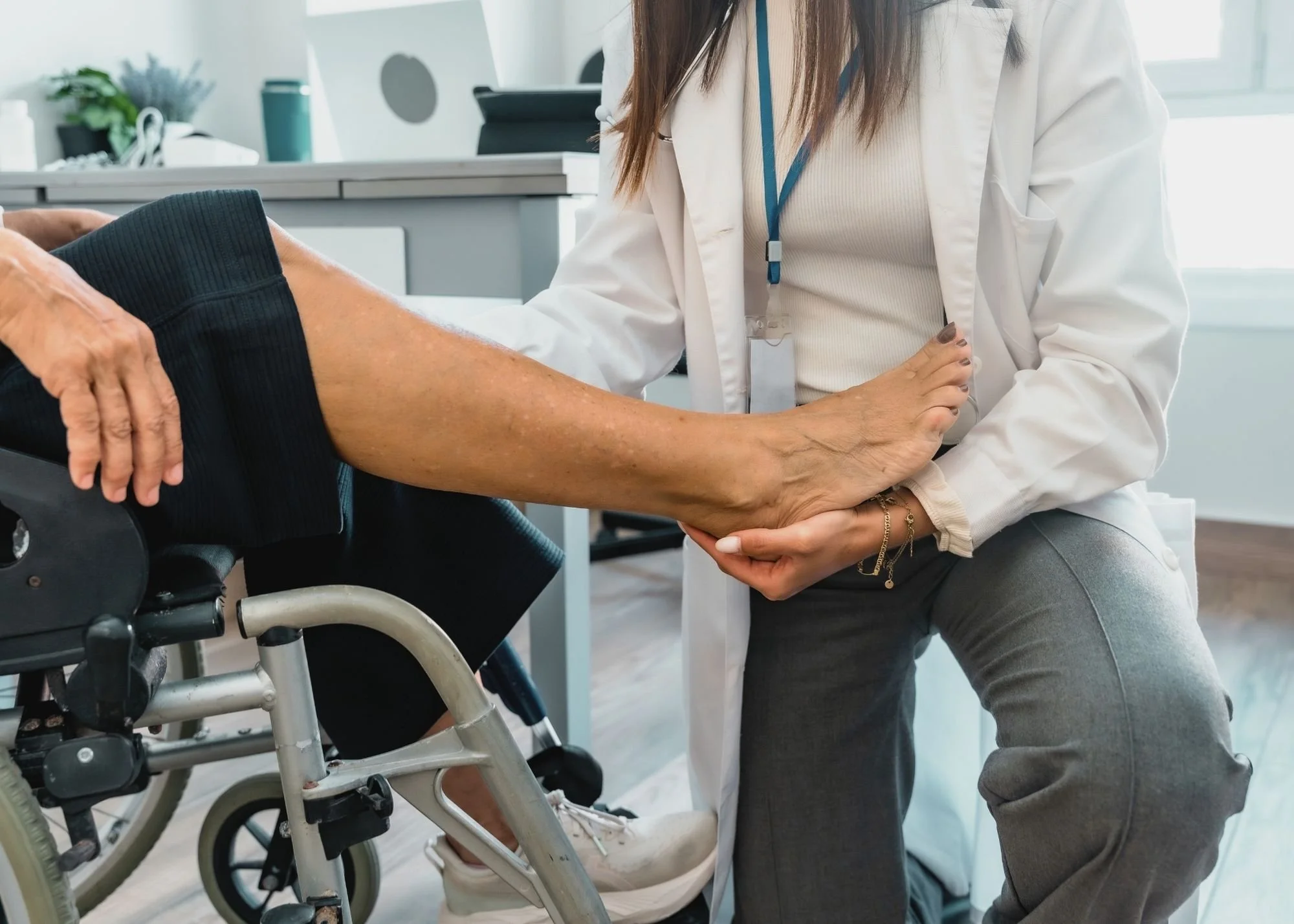
Geriatric foot care addresses the specific foot health needs of older adults. As we age, feet change in predictable ways: skin becomes thinner and drier, nails thicken and become harder to trim, circulation often diminishes, balance and proprioception decrease, and chronic conditions like arthritis, diabetes, and peripheral neuropathy become more common.
Comprehensive geriatric foot care addresses these changes proactively. Regular professional nail and skin care prevents the conditions that lead to mobility problems. Custom orthotics and protective footwear support arches and protect at-risk pressure points. Fall prevention strategies address the foot factors that contribute to dangerous falls. Chronic condition management keeps small problems from becoming big ones.
WHAT'S INCLUDED IN THIS SERVICE
— Comprehensive senior foot exam. Sensation testing, vascular assessment, structural evaluation, fall risk assessment, and skin and nail inspection.
— Professional nail and skin care. Safe, sterile management of thickened nails, calluses, corns, and fungal issues that older adults often can't manage at home.
— Fall prevention. Evaluation of balance, gait, and footwear with specific recommendations to reduce fall risk.
— Chronic condition management. Coordinated care for diabetes, arthritis, neuropathy, and other conditions affecting foot health.
Who This Is For
Built for older adults and their caregivers.
Many older adults struggle to manage their own foot care effectively. Reduced flexibility, vision changes, thickened nails, arthritis in the hands, and balance concerns make self-care progressively difficult. Family caregivers often handle some aspects but appropriately defer to professional care for nail care, skin issues, and ongoing assessment.
Regular professional foot care for older adults isn't a luxury — it's a meaningful intervention that supports independence and prevents serious problems. Patients seeing a podiatrist quarterly often catch and resolve issues that would have led to falls, ulcers, or hospitalizations if managed only at home.
For older adults with diabetes, our diabetic foot care service provides intensive monitoring and prevention. For those with arthritis affecting the feet, our arthritic foot care addresses pain management, mobility preservation, and progression management. Both integrate naturally with broader geriatric foot care.
We work closely with primary care physicians, geriatric specialists, and family caregivers. Communication between providers and family members produces better outcomes than fragmented care. We send notes back to your primary physician after every visit and welcome family members at appointments when patients prefer.
CONDITIONS AND CONCERNS WE ADDRESS
— Diabetic Foot Care →
— Arthritic Foot Care →

Voted Best Podiatrist in the Best of Mile High — three years running.
RECOGNITION
We've been honored to be voted Best Podiatrist in the Best of Mile High in 2023, 2024, and 2025, and we've been named a Neighborhood Fave by Nextdoor. We've also earned a 4.8-star rating from more than 1,300 patients across our two offices. We mention this because we're proud of it — but also because those ratings are built one visit at a time, by real patients who took the time to say something. We don't take that lightly.
🏆 Best of Mile High 2023
🏆 Best of Mile High 2024
🏆 Best of Mile High 2025
⭐ Nextdoor Neighborhood Fave
how it works
Three steps to walking without pain again.
The path from your first phone call to lasting relief is simpler than most patients expect — and we'll walk you through every part of it.
STEP 1
Call to schedule
Pick the office that's most convenient — Wheat Ridge or Boulder — and call to book. New patients are always welcome, and most insurance plans are accepted.
01
STEP 2
Come in for a thoughtful evaluation
Your first visit is a conversation, not a conveyor belt. We listen to your history, examine what's going on, and use in-office digital X-rays or musculoskeletal ultrasound if we need a closer look.
02
STEP 3
Start a plan built around you
You'll leave understanding your condition, your options, and exactly what the next step looks like. No pressure, no upsell — just steady care.
03
Related Resources
Keep reading from our patient education library.
Related condition
Arthritic foot care
Foot arthritis affects most older adults to some degree. Specialized care preserves mobility and reduces daily pain.
Blog · aging
Foot exercises and care for older adults: staying steady at every age
Daily care strategies, balance exercises, and what older adults can do to maintain foot health and prevent falls.
Treatment service
Custom orthotics
Properly designed orthotics support older feet, redistribute pressure, and reduce fall risk.
Blog · arthritis
Arthritic foot care: managing foot and ankle arthritis
Practical strategies for living well with foot arthritis at every stage.
Related service
Diabetic foot care
Many older adults manage diabetes alongside other foot concerns. Coordinated care addresses both proactively.
Blog · Diabetic
Diabetic foot care: why it's different and what to watch for
For older adults managing diabetes, this guide covers daily care and warning signs.
ANSWERS TO COMMON QUESTIONS
What patients ask about geriatric foot care.
-
Most older adults benefit from podiatry visits at least every 3 to 6 months for routine nail care and ongoing assessment. Patients with diabetes, peripheral arterial disease, neuropathy, or active foot problems benefit from more frequent visits. Patients who manage well at home may need only annual comprehensive exams.
The right cadence depends on individual risk factors and care needs. Patients who can no longer safely trim their own nails benefit from regular visits for that alone. Those with thickened nails, recurring corns or calluses, or skin issues benefit from professional care that prevents the problems home management can't fully address. We work with each patient to set the right schedule based on their specific situation.
-
Professional nail care for older adults prevents complications from improperly trimmed nails — ingrown nails, lacerations, fungal infections, and pressure ulcers. Many older adults can't safely trim their own thickened nails due to vision changes, reduced flexibility, arthritis, or balance concerns. Professional care addresses these limitations.
The risks of inadequate nail care escalate with age. Ingrown nails that would be inconvenient for younger patients can lead to serious infections in older adults, particularly those with diabetes or compromised circulation. Fungal nails create pressure points that can cause skin breakdown. Routine professional nail care prevents these escalations. For Medicare patients with qualifying conditions, this care is covered.
-
Yes — foot problems are significant contributors to fall risk in older adults. Pain that alters gait, reduced sensation, weakness, structural deformities, inappropriate footwear, and balance disturbances all increase fall risk. Comprehensive foot care addresses these factors and meaningfully reduces fall incidence.
Falls are the leading cause of injury-related death in adults over 65, and foot health is one of the most modifiable factors. Professional foot care identifies and addresses problems before they affect gait. Custom orthotics support arches and improve proprioception. Footwear evaluation ensures patients wear shoes that support stability rather than compromise it. Fall prevention is one of the highest-leverage interventions we provide for older adults.
-
Yes — Medicare covers many geriatric foot care services. Routine foot care including nail debridement is covered for patients with qualifying conditions including diabetes, peripheral arterial disease, or peripheral neuropathy. Most other podiatric services including treatment of injuries, infections, and structural problems are covered standard.
The Medicare Therapeutic Shoe Bill provides therapeutic shoes and inserts annually for diabetic patients with qualifying conditions. Routine nail and skin care for patients without qualifying systemic conditions may be considered cosmetic and not covered. Our front office team verifies your specific Medicare benefits and any supplemental coverage before treatment so there are no surprises.
-
Yes — when patients prefer, family caregivers are welcome at appointments. Caregivers often catch important details, help with care plan implementation at home, and serve as additional points of contact between visits. Their involvement frequently improves outcomes by ensuring care plans are practically executable.
We tailor our communication to whoever is in the room and authorized to participate. For patients with cognitive changes, caregiver involvement is often essential for safe care continuity. For patients managing well independently, we respect that autonomy and provide care directly. For families navigating care together, we adapt to whatever arrangement works best — including phone consultations with caregivers between visits when warranted.

READY WHEN YOU ARE
Call to schedule your visit.
We see patients from across the Denver metro area at our Wheat Ridge and Boulder offices. Both locations are accepting new patients, and both offer free parking. Call whichever office is most convenient — we'll take it from there.