
services · custom orthotics
Generic insoles solve generic problems. Yours is more specific.
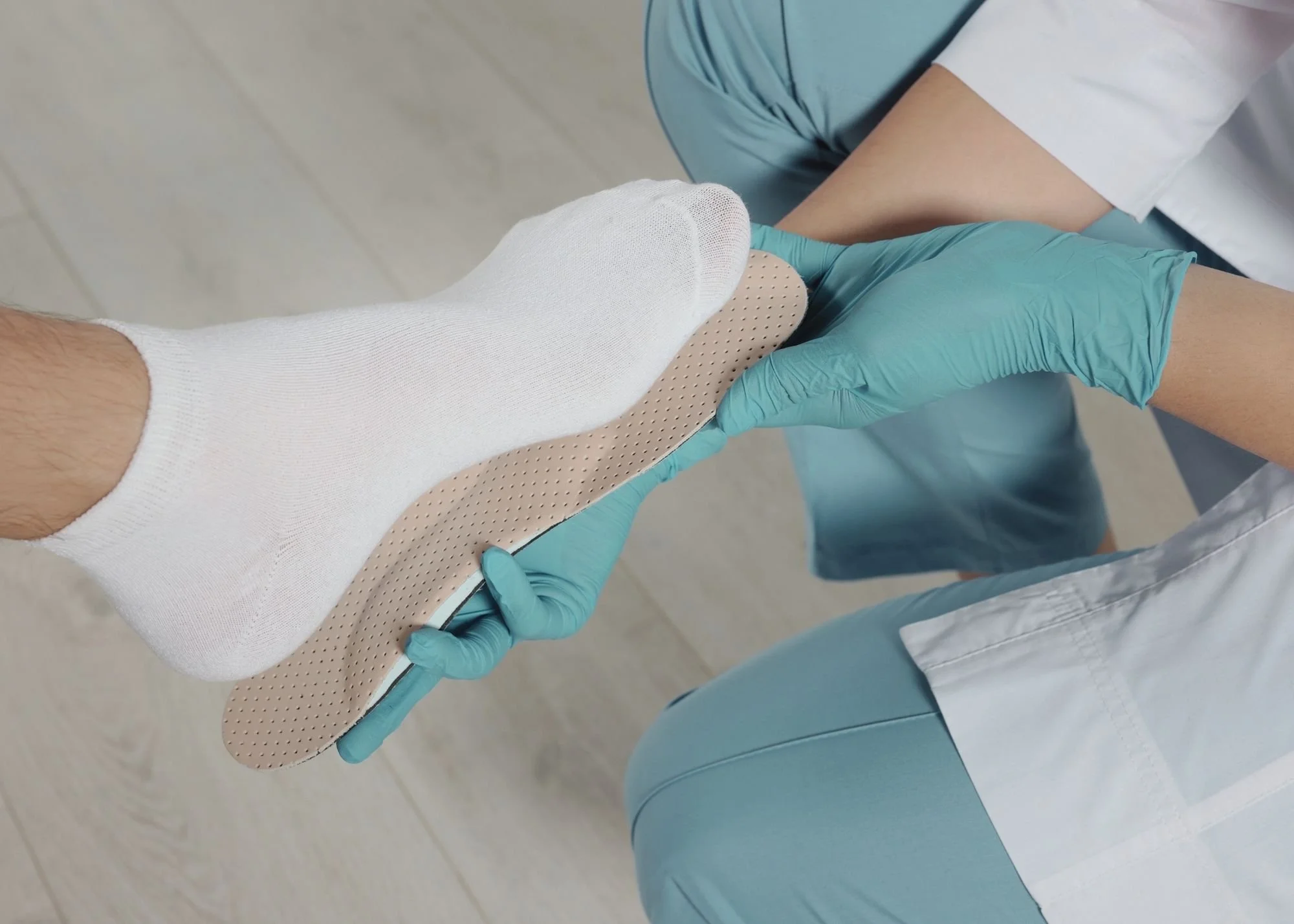
Custom orthotics are prescription medical devices designed specifically for your feet, your gait, and the conditions affecting you. The difference between custom orthotics and over-the-counter insoles is the difference between corrective lenses and reading glasses — both might help, but only one is calibrated to you.
Wheat Ridge
⛰
Boulder
⛰
Arvada
⛰
Lakewood
⛰
Golden
⛰
Edgewater
⛰
Louisville
⛰
Lafayette
⛰
Superior
⛰
Broomfield
⛰
Erie
⛰
Longmont
⛰
Wheat Ridge ⛰ Boulder ⛰ Arvada ⛰ Lakewood ⛰ Golden ⛰ Edgewater ⛰ Louisville ⛰ Lafayette ⛰ Superior ⛰ Broomfield ⛰ Erie ⛰ Longmont ⛰

About This Service
What custom orthotics actually involve.
Custom orthotics are individually designed prescription medical devices made from molds or scans of your specific feet. They're prescribed for specific conditions, designed to address specific biomechanical issues, and built to deliver targeted support and correction that off-the-shelf products simply cannot match.
The process starts with a thorough biomechanical evaluation: gait analysis, structural assessment, range-of-motion testing, and identification of the specific conditions and patterns we need to address. From there, we capture impressions of your feet (typically through casting or 3D scanning) and prescribe orthotics designed for your specific situation. The orthotics are then manufactured by a specialized orthotics laboratory to our specifications.
WHAT'S INCLUDED IN THIS SERVICE
— Comprehensive biomechanical evaluation. Gait analysis, structural assessment, and identification of the specific issues your orthotics need to address.
— Custom impressions or scans. Casting or 3D scanning to capture your feet's specific shape and structure.
— Orthotics designed for you. Prescription specifications matched to your conditions, activity level, footwear, and biomechanics.
— Fitting and adjustment. Initial fitting, breaking-in guidance, and adjustments as needed for optimal comfort and effectiveness.
Who This Is For
Built for the patients who need real biomechanical correction.
Most patients who benefit from custom orthotics fall into specific categories: people with chronic foot conditions like plantar fasciitis or fallen arches that haven't responded to standard care, athletes whose gait patterns contribute to recurring injuries, diabetic patients who need pressure-redistributing orthotics to prevent ulcers, and patients with structural foot problems requiring biomechanical correction.
For active patients — Boulder runners, Front Range hikers, recreational athletes — custom orthotics often make the difference between recurring injury cycles and sustainable training. Properly designed athletic orthotics address the specific biomechanical issues driving your particular injury pattern.
For diabetic patients, custom diabetic orthotics redistribute pressure away from high-risk areas where ulcers develop. Combined with appropriate footwear, custom orthotics significantly reduce ulceration risk in patients with neuropathy or previous ulcers.
For patients with structural conditions — flat feet, high arches, leg length discrepancies, post-surgical biomechanical needs — custom orthotics provide the specific correction these conditions require. Off-the-shelf products simply can't address these issues with the precision custom orthotics provide.
CONDITIONS AND CONCERNS WE ADDRESS
— Plantar Fasciitis →
— Flat Feet / Fallen Arches →

Voted Best Podiatrist in the Best of Mile High — three years running.
RECOGNITION
We've been honored to be voted Best Podiatrist in the Best of Mile High in 2023, 2024, and 2025, and we've been named a Neighborhood Fave by Nextdoor. We've also earned a 4.8-star rating from more than 1,300 patients across our two offices. We mention this because we're proud of it — but also because those ratings are built one visit at a time, by real patients who took the time to say something. We don't take that lightly.
🏆 Best of Mile High 2023
🏆 Best of Mile High 2024
🏆 Best of Mile High 2025
⭐ Nextdoor Neighborhood Fave
how it works
Three steps to walking without pain again.
The path from your first phone call to lasting relief is simpler than most patients expect — and we'll walk you through every part of it.
STEP 1
Call to schedule
Pick the office that's most convenient — Wheat Ridge or Boulder — and call to book. New patients are always welcome, and most insurance plans are accepted.
01
STEP 2
Come in for a thoughtful evaluation
Your first visit is a conversation, not a conveyor belt. We listen to your history, examine what's going on, and use in-office digital X-rays or musculoskeletal ultrasound if we need a closer look.
02
STEP 3
Start a plan built around you
You'll leave understanding your condition, your options, and exactly what the next step looks like. No pressure, no upsell — just steady care.
03
Related Resources
Keep reading from our patient education library.
Related condition
Plantar fasciitis
Custom orthotics are one of the most impactful long-term treatments for plantar fasciitis tied to biomechanical issues.
Blog · Footwear
Arch support & running shoes: a guide for active Coloradans
How custom orthotics work alongside athletic footwear — and when stock support is enough.
related condition
Flat feet / fallen arches
For symptomatic flat feet, properly designed orthotics provide the structural support that off-the-shelf products can't match.
Blog · Self-Care
Foot exercises for strong, pain-free feet
Strengthening and stretching that complement orthotic support.
Related service
Sports medicine
For athletes, custom orthotics often make the difference between recurring injuries and sustainable training.
Blog · Diabetic
Diabetic foot care: why it's different and what to watch for
Why custom orthotics are particularly important for diabetic patients managing pressure points.
ANSWERS TO COMMON QUESTIONS
What patients ask about custom orthotics.
-
For the right patients, custom orthotics provide significantly more benefit than over-the-counter insoles — better correction, better fit, more durability, and meaningful improvement in symptoms. They typically last 3 to 5 years and address conditions that off-the-shelf products simply cannot. For mild conditions, quality OTC insoles may be adequate.
The decision often comes down to whether biomechanical correction will genuinely make a difference for your specific situation. Patients with chronic plantar fasciitis, fallen arches, or recurring sports injuries who haven't responded to OTC support typically see meaningful improvement with custom orthotics. Patients with mild, occasional symptoms often do well with quality store-bought insoles. We're honest about which category you're in before recommending custom orthotics.
-
Custom orthotics typically last 3 to 5 years for most adult patients, though this varies based on activity level, body weight, materials used, and how the orthotics are cared for. Athletic orthotics for runners may need replacement more frequently. Pediatric orthotics need replacement as children grow.
Signs your orthotics may need replacement include visible wear or compression of the materials, return of symptoms that had previously resolved, and changes in fit. Annual evaluation by your podiatrist identifies when replacement is appropriate. Modifications and refurbishments can sometimes extend the life of orthotics rather than requiring complete replacement. We help you maximize the value of your investment in custom orthotics.
-
Most patients adapt to custom orthotics over 1 to 2 weeks of gradually increasing wear time. Start with 1 to 2 hours daily, increase by an hour or two each day, and reach all-day wear within about a week. Some patients adapt faster, others need slightly longer. Patience during break-in is important.
Initial discomfort during break-in is normal and doesn't indicate a problem with the orthotics. Common sensations include arch pressure, heel feel changes, and gait awareness — all of which typically resolve as your feet and lower body adapt. If significant pain develops or persists beyond 2 weeks, return for adjustments. Minor modifications often resolve break-in issues completely.
-
Coverage varies significantly by insurance plan. Some plans fully cover custom orthotics for specific qualifying conditions. Others provide partial coverage. Many don't cover them at all. Coverage typically depends on the diagnosis driving the prescription. HSA and FSA accounts can be used for orthotics in most cases.
Conditions that more commonly qualify for coverage include plantar fasciitis, diabetic foot care, severe deformity correction, and specific structural conditions. Orthotics for general comfort or athletic performance are often not covered. Our front office team verifies your specific orthotics benefits before we begin the process so you have clear cost expectations. We also help you maximize coverage when partial benefits apply.
-
Over-the-counter insoles provide generic cushioning and basic arch support designed for average feet. Custom orthotics are prescription medical devices designed specifically for your feet, your gait, and your specific conditions. The difference matters most for patients with significant biomechanical issues or specific medical conditions that need targeted correction.
Quality OTC insoles can help with mild symptoms, particularly for patients with relatively normal foot mechanics. They're appropriate for patients trying conservative measures before considering custom orthotics. Custom orthotics become worth the investment when OTC products haven't been adequate, when specific medical conditions warrant targeted correction, or when activity level demands precision support. We help you understand which is right for your specific situation rather than defaulting to one option.

READY WHEN YOU ARE
Call to schedule your visit.
We see patients from across the Denver metro area at our Wheat Ridge and Boulder offices. Both locations are accepting new patients, and both offer free parking. Call whichever office is most convenient — we'll take it from there.