
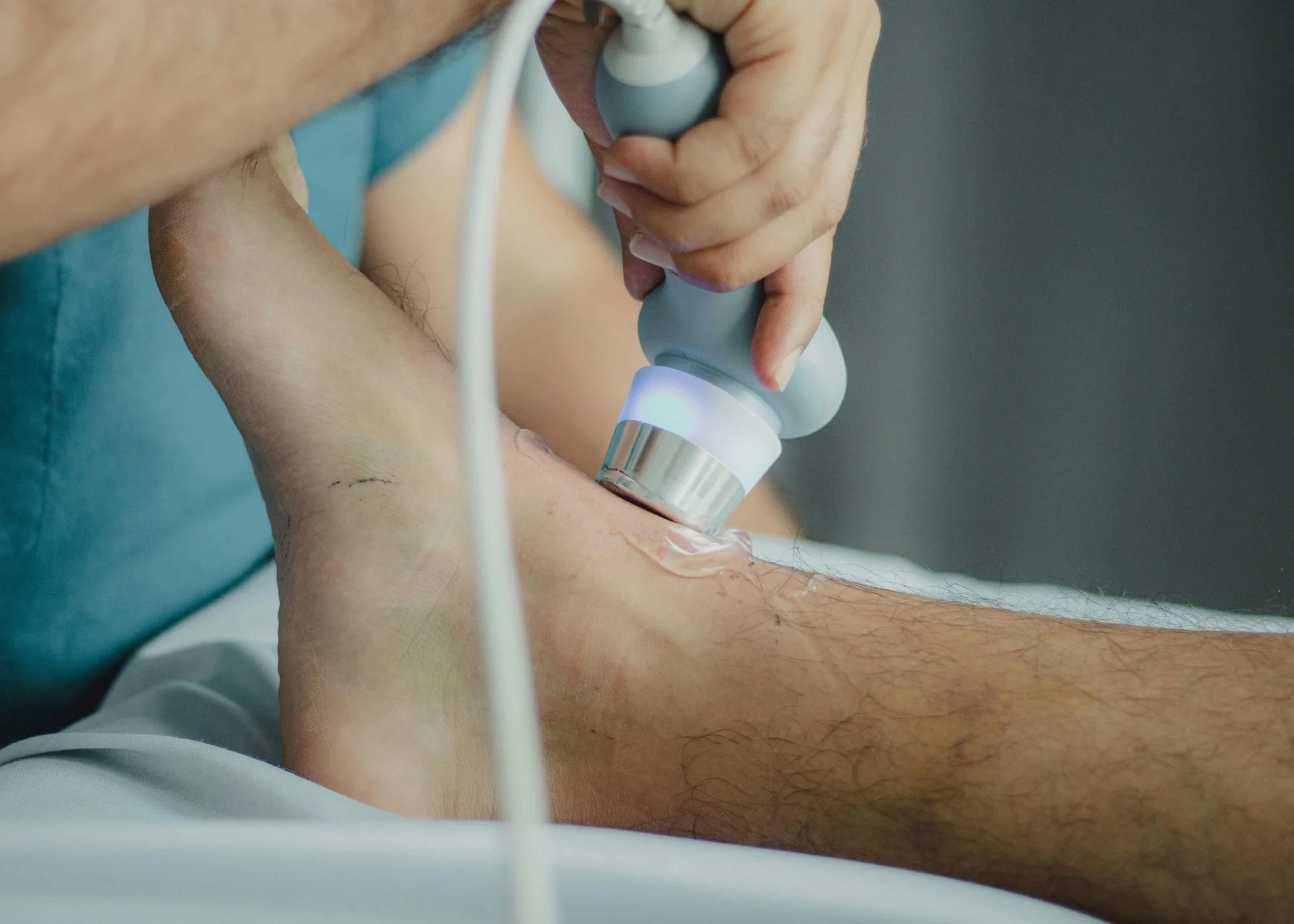
ADVANCED TREATMENTS
Modern Tools, Thoughtfully Applied
Some foot and ankle conditions respond beautifully to time, rest, and thoughtful rehabilitation. Others need more. This page walks through the advanced treatment technologies we offer in-office — what they are, who they might help, and why they exist as alternatives or supplements to traditional surgery.
The advanced treatments that expand what conservative care can do.

WHY IT MATTERS
More options means better outcomes.
For decades, the answer to stubborn foot and ankle problems was pretty binary: either it got better with rest and conservative care, or it needed surgery. A lot of patients got stuck in between — their problem wasn't quite severe enough for surgery, but rest alone wasn't solving it either.
Advanced treatments fill that middle ground. They let us target pain and dysfunction more precisely, often without anesthesia or downtime, and they give us meaningful alternatives when traditional approaches haven't worked. We've invested in these technologies because they expand what we can offer you — not because they're trendy.
A modern approach to bunion correction.
LAPIPLASTY
Lapiplasty is a surgical technique that addresses bunions at their root cause — the unstable joint at the base of the big toe — rather than just shaving off the visible bump. For the right patients, it can offer a more stable correction and a faster return to weight-bearing than some traditional bunion surgeries.
Our providers perform a high volume of bunion surgery and can walk you through whether Lapiplasty is the right approach for your specific case. It isn't right for everyone, but for many patients with moderate to severe bunions, it's become a meaningful option.
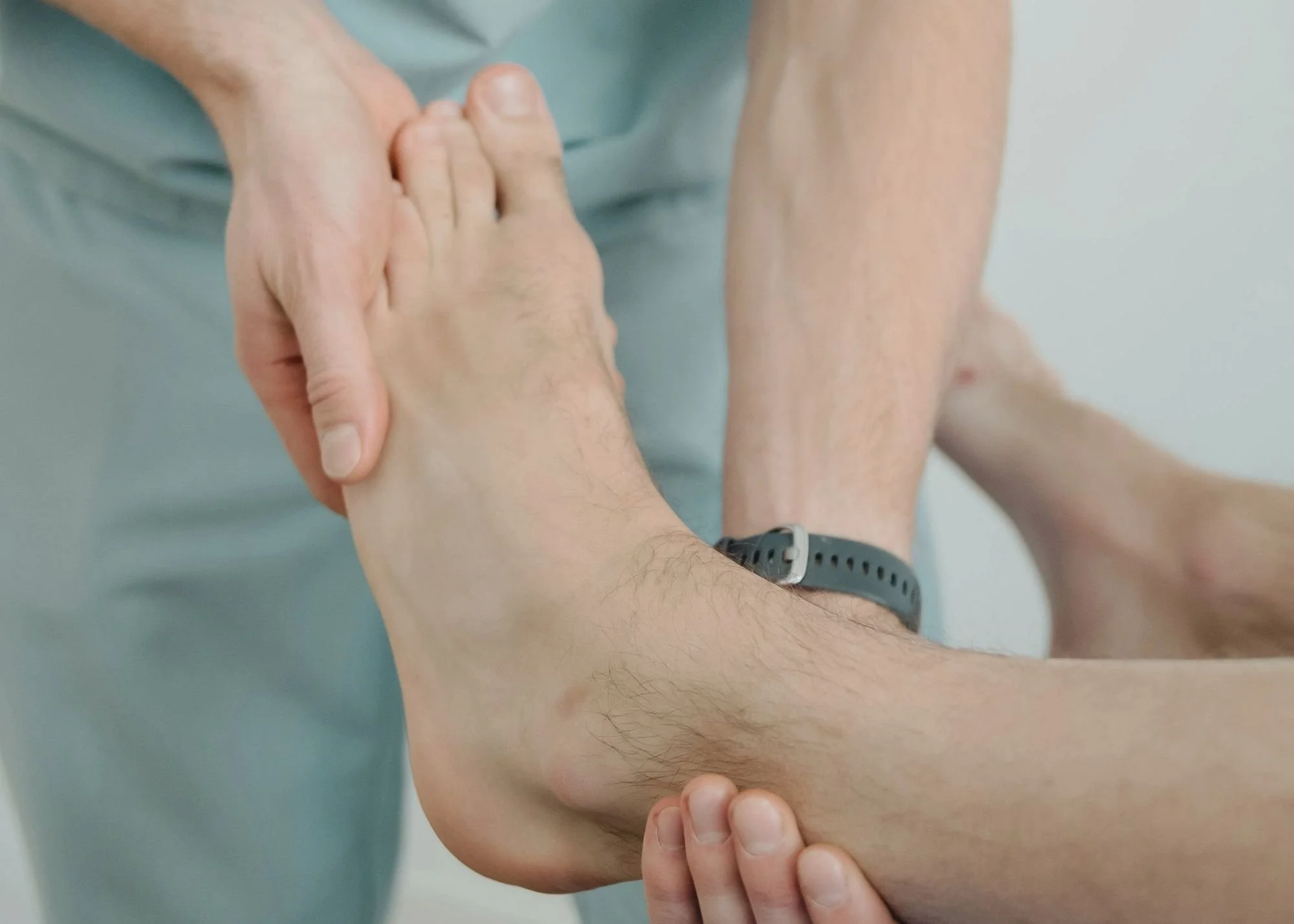
LASER THERAPY
Non-invasive laser therapy for pain and inflammation.
Laser therapy is a non-invasive treatment often used for pain, inflammation, and soft tissue recovery. It's been used as a conservative treatment option for conditions like plantar fasciitis, Achilles tendinopathy, neuropathy, and post-surgical recovery. Treatments are typically short, don't require anesthesia, and don't involve downtime.
We use therapeutic laser therapy as part of our non-surgical toolkit — not as a standalone miracle cure, but as a legitimate option for patients whose pain hasn't responded to other conservative approaches.
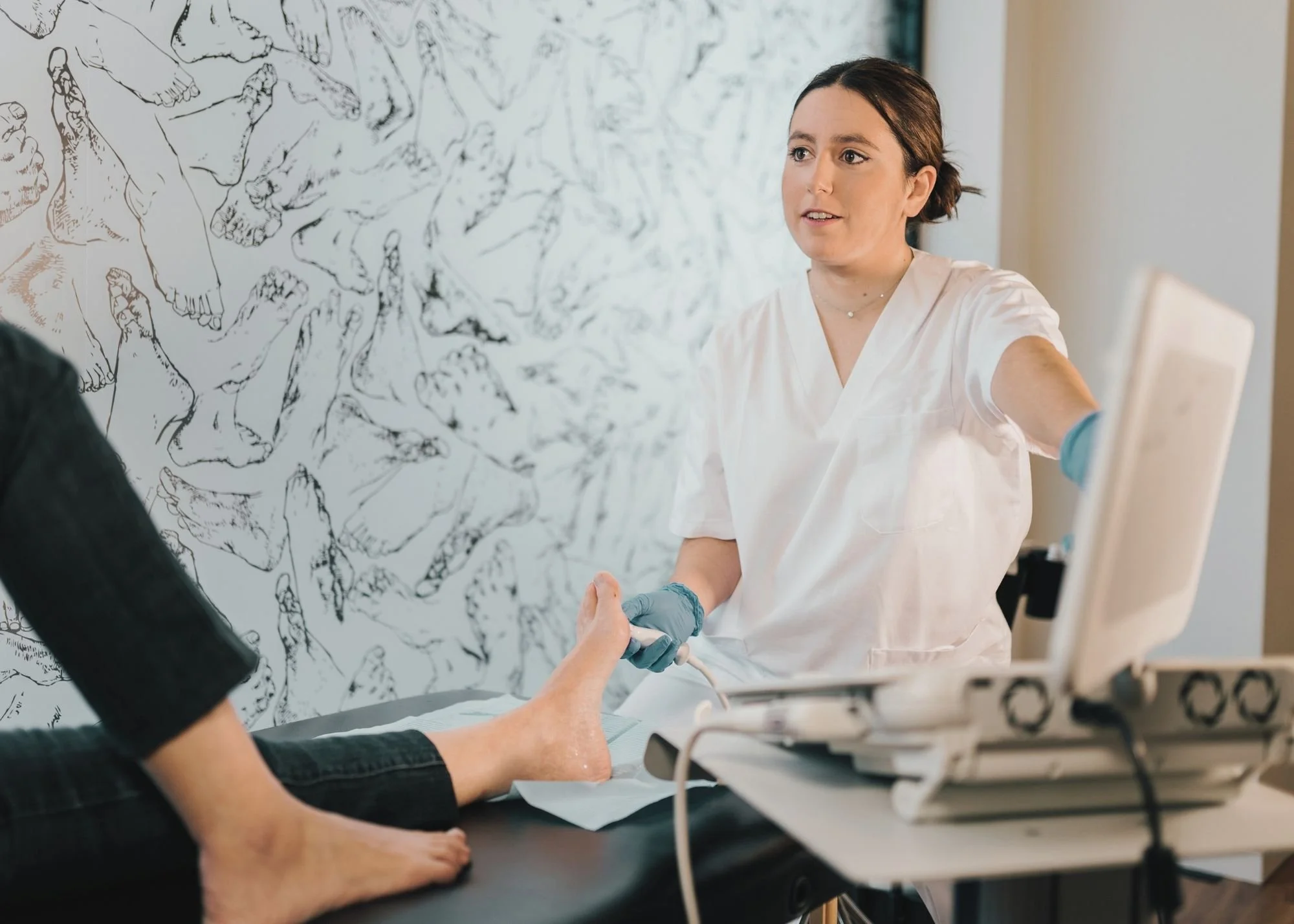
REGENERATIVE MEDICINE
Tapping your body's own healing response.
Regenerative medicine refers to a group of treatments that work with your body's natural healing processes to address chronic tendon, ligament, and soft tissue conditions. These therapies are often considered when other conservative options haven't worked — and when surgery feels like too big of a next step.
As with any advanced treatment, regenerative options aren't right for every patient or every condition. Your podiatrist will walk you through whether it's worth exploring in your specific case.
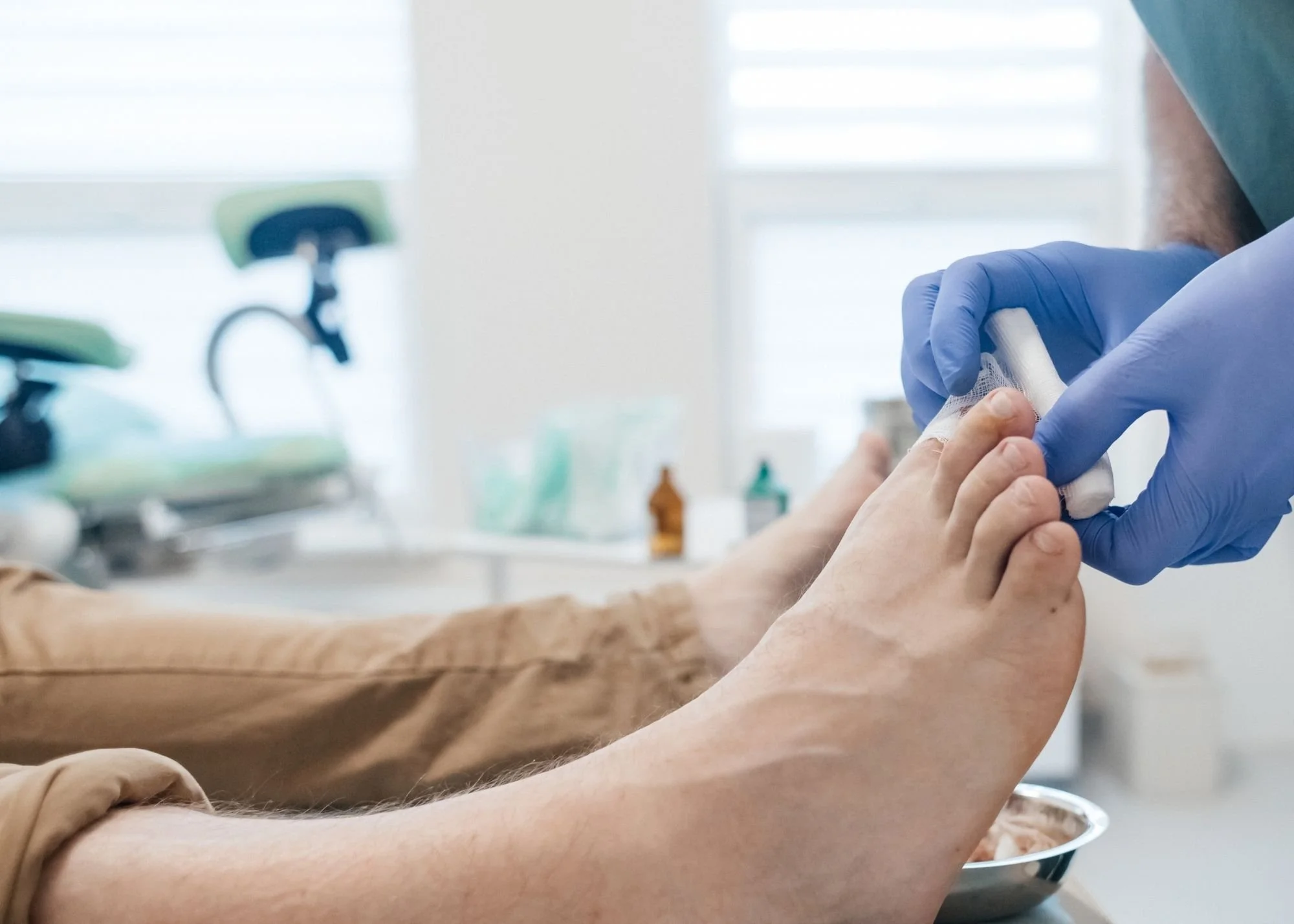
RADIAL SHOCKWAVE
Targeted acoustic waves for chronic pain.
Radial shockwave therapy delivers pulses of acoustic energy to areas of chronic pain or slow-healing soft tissue. It's often used for stubborn plantar fasciitis, Achilles tendinopathy, and other conditions where scar tissue and chronic inflammation have become part of the problem. Treatments are non-invasive, don't require anesthesia, and typically involve a short series of sessions.
SWIFT® Therapy
A newer approach to stubborn plantar warts.
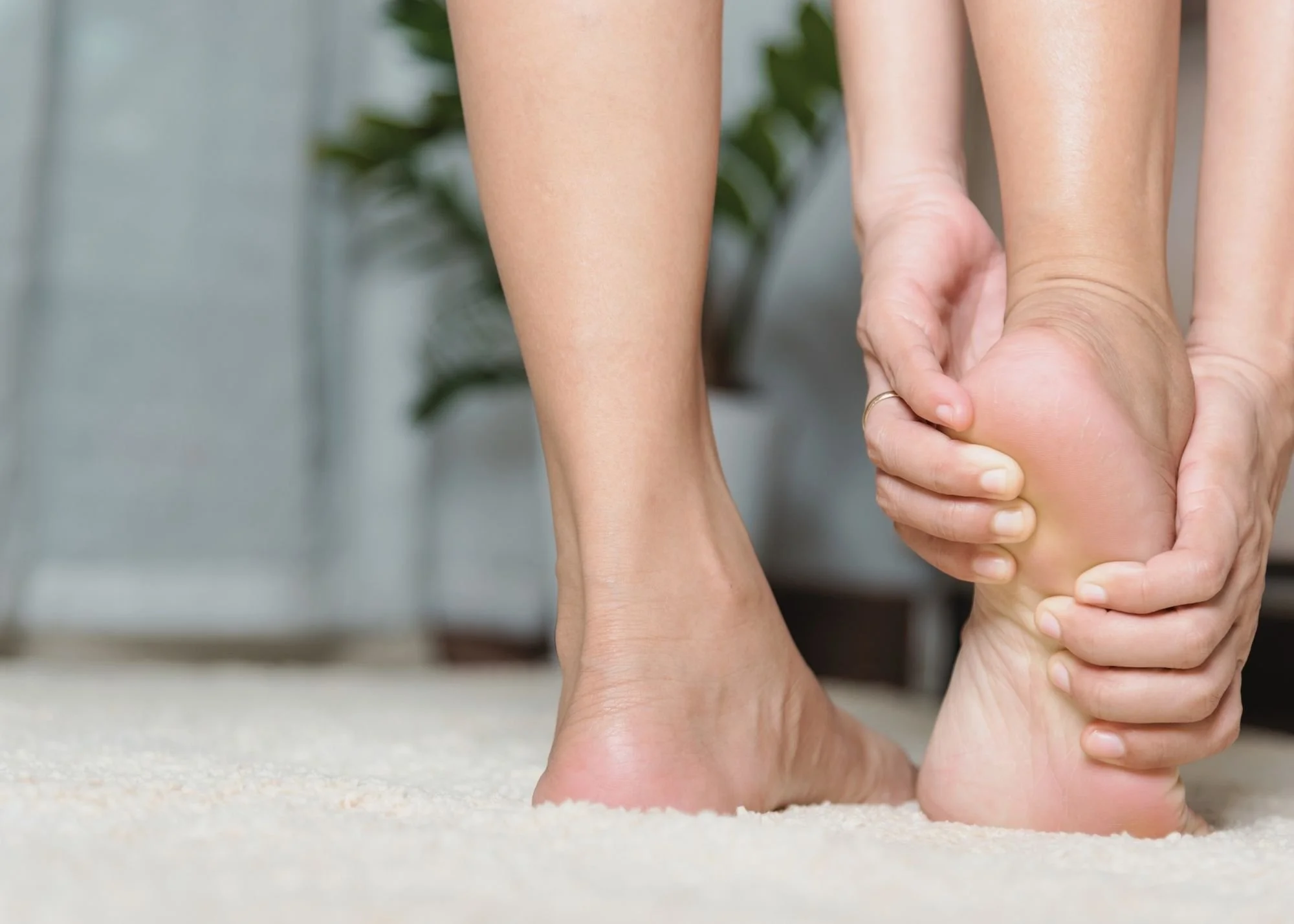
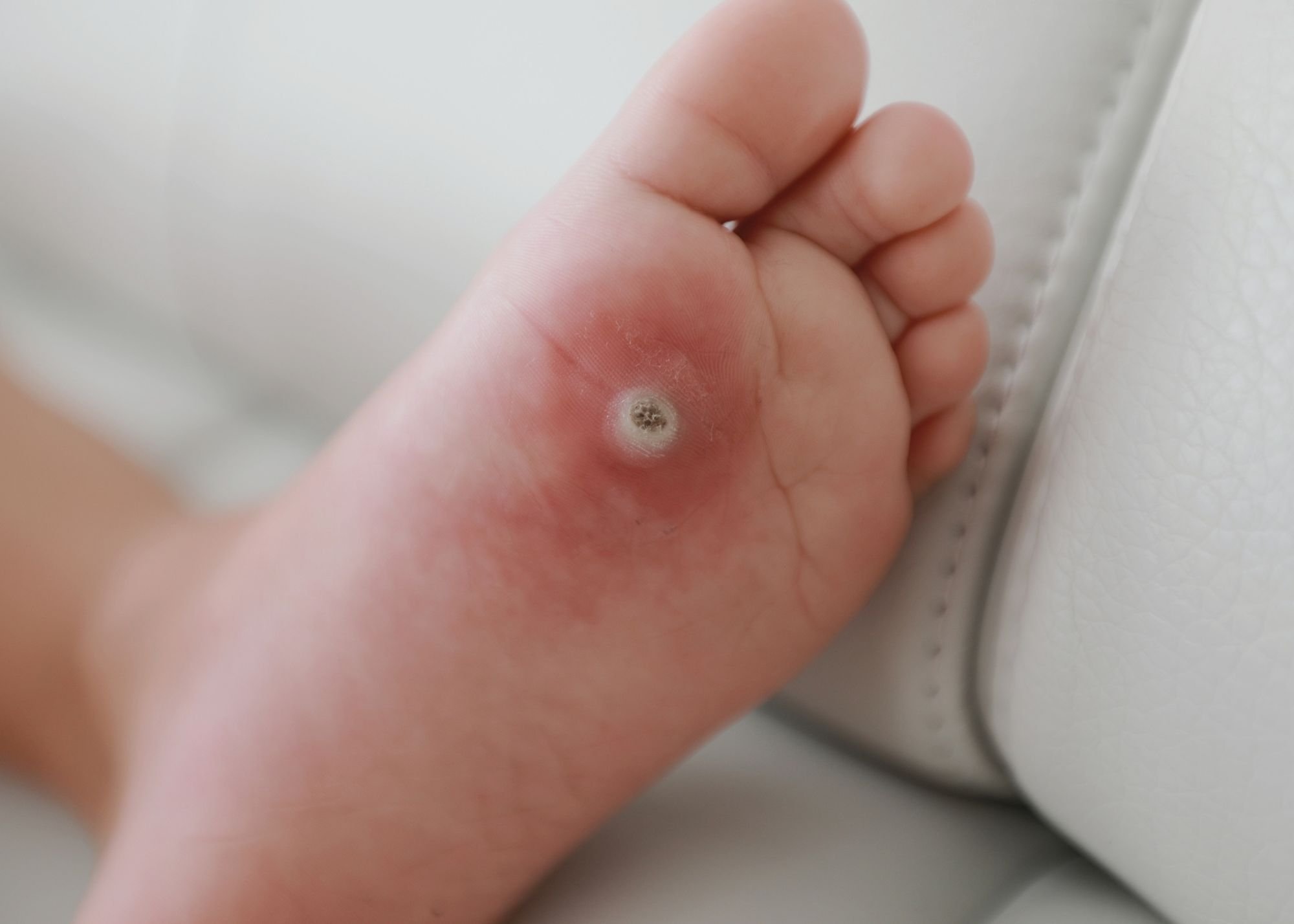
SWIFT® Therapy is a treatment for plantar warts that uses microwave energy to target the wart and trigger an immune response. It's often considered for warts that haven't responded to more traditional treatments like cryotherapy or salicylic acid. Treatments are brief, in-office, and don't require anesthesia or downtime.
FUNGAL NAIL LASER
An alternative to topical and oral fungal nail treatments.
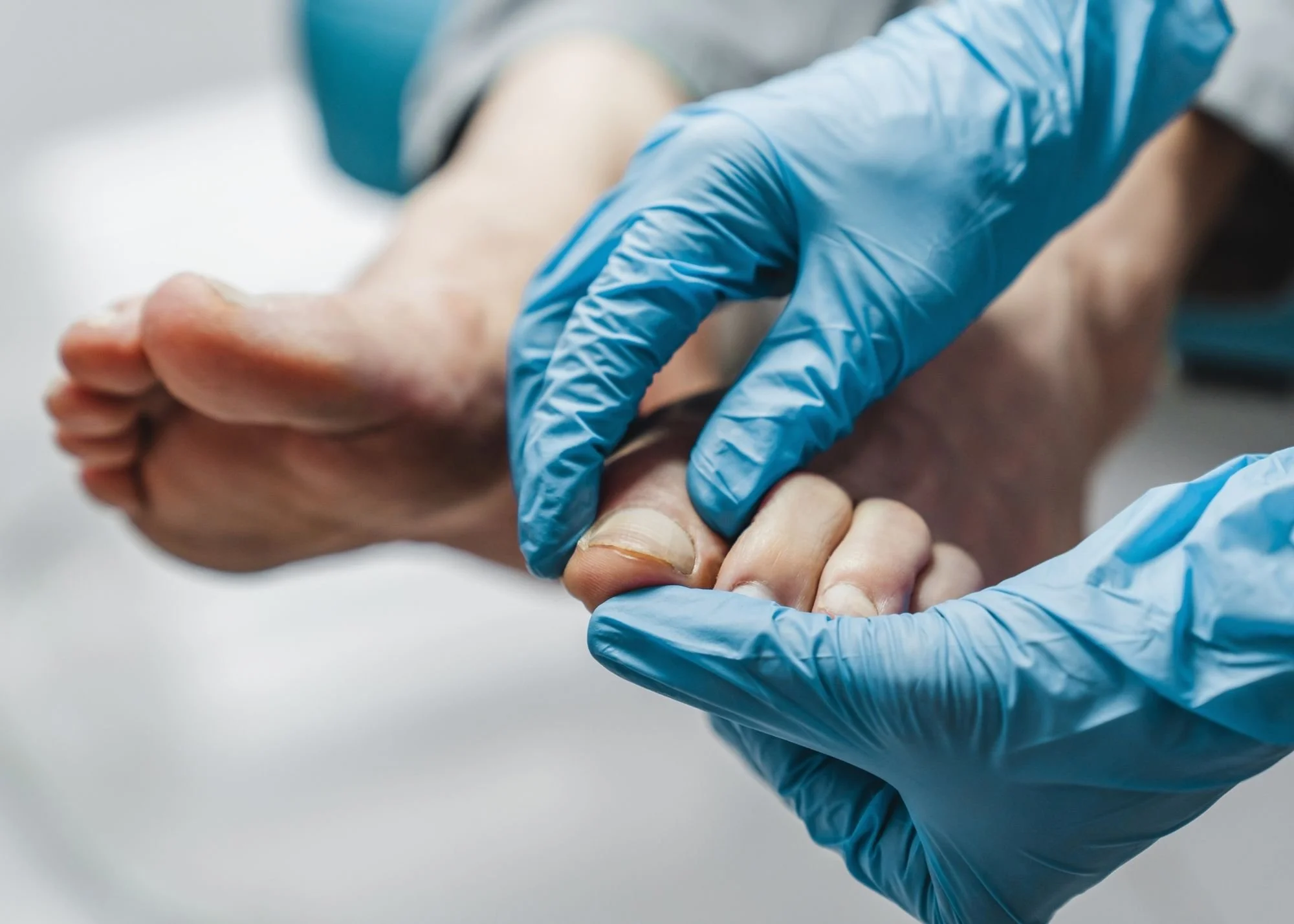
Laser therapy for fungal toenails is a non-invasive option that targets the fungus under the nail. It's often considered by patients who haven't had success with topical treatments or who prefer to avoid oral antifungal medications. Like most fungal nail treatments, results take time — nails grow slowly, and it may take several months to see visible improvement as the healthy nail grows in.
NEXT STEPS
The only way to know is to be evaluated.
Every one of the treatments on this page has specific indications — specific conditions, specific patient profiles, and specific circumstances where it makes sense. None of them are magic, and none of them are right for everyone. The best way to figure out whether an advanced treatment is worth exploring for your situation is to come in for an evaluation and talk it through with one of our doctors.

how it works
Three simple steps to get you moving again.
STEP 1
Call to schedule
Pick the office that's most convenient — Wheat Ridge or Boulder — and call to book. We answer the phone. New patients are always welcome, and most insurance plans are accepted.
01
STEP 2
Come in for a thoughtful evaluation
Your first visit is a conversation, not a conveyor belt. We listen to your history, examine what's going on, and use in-office digital X-rays or musculoskeletal ultrasound if we need a closer look.
02
STEP 3
Start a plan built around you
You'll leave understanding your condition, your options, and exactly what the next step looks like. No pressure, no upsell — just steady care.
03
COMMON Treatment QUESTIONS
Frequently Asked Questions
-
Lapiplasty addresses the unstable joint at the root of the bunion deformity, rather than just reducing the visible bump. For the right patient, it can offer a more stable, long-lasting correction. Whether it’s the better option for you depends on the severity of your bunion, your anatomy, and your goals — it isn’t right for everyone. Our doctors can walk you through which approach makes the most sense for your specific case.
-
Both are non-invasive, in-office treatments, but they work differently. Radial shockwave therapy delivers pulses of acoustic energy to break up scar tissue and stimulate healing in areas of chronic soft tissue pain — most often used for plantar fasciitis and Achilles tendinopathy. MLS laser therapy uses light energy to reduce inflammation and promote tissue repair — often used for pain, neuropathy, and post-surgical recovery. Your podiatrist will recommend the approach that best matches your condition and treatment history.
-
Coverage varies by plan and technology. While most surgical procedures (like Lapiplasty) are typically covered, some newer non-invasive therapies like MLS Laser or Swift may be considered elective by certain providers. Our team will perform a detailed benefits check before you start any treatment so you understand exactly what your out-of-pocket costs will be.
-
For technologies like Shockwave or Laser, most patients see the best results after a series of 3 to 6 sessions. While some feel immediate relief due to reduced inflammation, these treatments work by triggering your body's natural healing response, which takes time. We will give you a specific "milestone" schedule during your evaluation so you know when to expect progress.
-
Because we offer a full spectrum of care, we aren't limited to just one tool. If a conservative advanced treatment doesn't provide the relief you need, we have the surgical expertise to pivot to more definitive corrections. Having these tools simply means we can explore every possible "stop" on the way to surgery, ensuring that if we do operate, it’s because it truly is the best remaining option.

READY WHEN YOU ARE
Call to schedule your visit.
We see patients from across the Denver metro area at our Wheat Ridge and Boulder offices. Both locations are accepting new patients, and both offer free parking. Call whichever office is most convenient — we'll take it from there.