
Conditions ·Hammertoes
Flexible deformities have options. Rigid ones have fewer.
Hammertoes are progressive — what starts as a flexible toe that bends slightly can become a rigid, painful deformity that won't straighten without surgery. The earlier we address it, the more options you have. Don't wait until it's limiting your shoes and your activities.
Wheat Ridge
⛰
Boulder
⛰
Arvada
⛰
Lakewood
⛰
Golden
⛰
Edgewater
⛰
Louisville
⛰
Lafayette
⛰
Superior
⛰
Broomfield
⛰
Erie
⛰
Longmont
⛰
Wheat Ridge ⛰ Boulder ⛰ Arvada ⛰ Lakewood ⛰ Golden ⛰ Edgewater ⛰ Louisville ⛰ Lafayette ⛰ Superior ⛰ Broomfield ⛰ Erie ⛰ Longmont ⛰
THE PROBLEM
A bent toe today is a fused joint tomorrow.
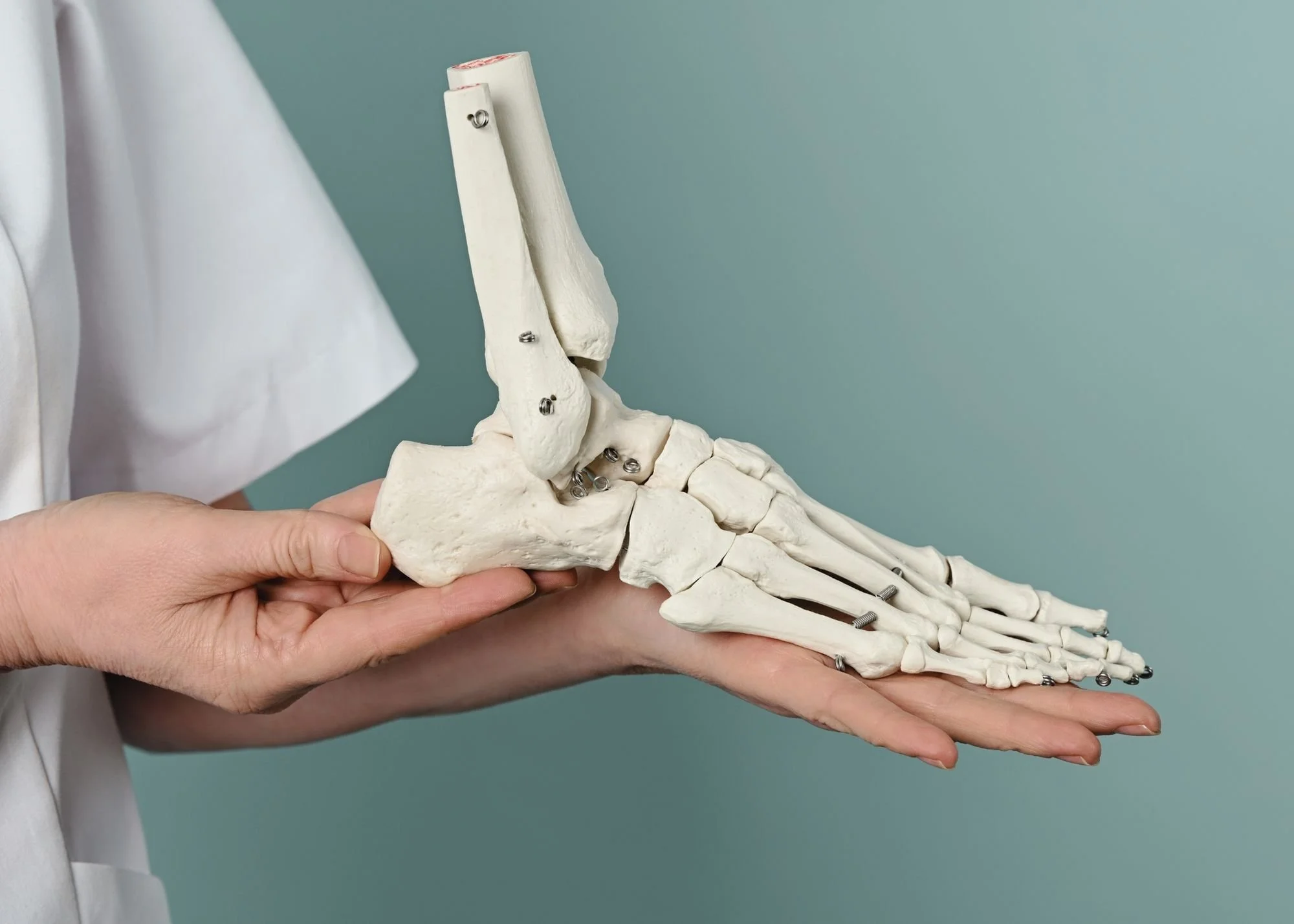
A hammertoe is a deformity where the middle joint of the toe bends downward, forming a hammer-like shape. It typically affects the second, third, or fourth toes and develops from imbalances between the muscles and tendons that control toe position. Footwear, foot structure, and certain medical conditions all contribute.
What matters clinically is whether the hammertoe is flexible or rigid. Flexible hammertoes can still be straightened by hand and often respond to conservative treatment. Rigid hammertoes are fixed in the bent position — they won't straighten without surgery, and conservative care can only manage symptoms rather than correct the deformity.
COMMON SYMPTOMS WE LOOK FOR
— Visible toe bend. A toe that's clearly bent at the middle joint, sometimes with the tip pointing downward into the shoe.
— Corns and calluses. Hardened skin on top of the bent joint or at the tip of the toe from shoe friction.
— Pain in shoes. Discomfort with closed-toe footwear, especially shoes with shallow toe boxes.
— Difficulty straightening the toe. Increasing rigidity over time, eventually leaving the toe permanently bent.
How We Treat It
For flexible hammertoes, conservative care can dramatically slow progression and reduce daily symptoms. Footwear modification (wide toe boxes, soft uppers, lower heels), toe stretches, custom orthotics, toe spacers, hammertoe splints, and corn or callus management address the most common issues.
Custom orthotics are particularly impactful when hammertoes are tied to underlying biomechanical issues. Properly designed orthotics address the gait patterns and pressure distribution problems that drive deformity progression — slowing the rate of worsening over time.
Treatment that matches the stage of the deformity.
For rigid hammertoes, especially those causing significant pain or functional problems, surgical correction is the only option that genuinely straightens the toe. Modern hammertoe surgery ranges from tendon release for flexible deformities to joint resection or fusion for rigid cases. Recovery typically involves several weeks in a post-op shoe with progressive return to normal footwear.
Hammertoe surgery is often performed alongside bunion correction, since the two conditions frequently coexist. We evaluate honestly to recommend the right combination of procedures for your specific situation.
TREATMENT OPTIONS WE OFFER FOR hammertoes
— Toe Splints & Spacers
— Footwear Modification

🏆 Best of Mile High 2023
🏆 Best of Mile High 2025
🏆 Best of Mile High 2024
⭐ Nextdoor Neighborhood Fave
Voted Best Podiatrist in the Best of Mile High — three years running.
RECOGNITION
We've been honored to be voted Best Podiatrist in the Best of Mile High in 2023, 2024, and 2025, and we've been named a Neighborhood Fave by Nextdoor. We've also earned a 4.8-star rating from more than 1,300 patients across our two offices. We mention this because we're proud of it — but also because those ratings are built one visit at a time, by real patients who took the time to say something. We don't take that lightly.
how it works
Three steps to walking without pain again.
The path from your first phone call to lasting relief is simpler than most patients expect — and we'll walk you through every part of it.
STEP 1
Call to schedule
Pick the office that's most convenient — Wheat Ridge or Boulder — and call to book. New patients are always welcome, and most insurance plans are accepted.
01
STEP 2
Come in for a thoughtful evaluation
Your first visit is a conversation, not a conveyor belt. We listen to your history, examine what's going on, and use in-office digital X-rays or musculoskeletal ultrasound if we need a closer look.
02
STEP 3
Start a plan built around you
You'll leave understanding your condition, your options, and exactly what the next step looks like. No pressure, no upsell — just steady care.
03
Related Resources
Keep reading from our patient education library.
Treatment Service
Foot & ankle surgery
When rigid hammertoes need surgical correction, our team performs the full range of procedures.
Blog ·Related
Bunion causes & symptoms: why they form and how to recognize them
Bunions and hammertoes share many causes. Understanding bunions helps explain hammertoe development.
Treatment Service
Custom orthotics
Properly designed orthotics slow hammertoe progression by addressing underlying biomechanical issues.
Blog ·Surgery
Foot & ankle surgery: when it's the right choice and what to expect
An honest look at when surgical treatment makes sense, common procedures, and realistic recovery.
Related Condition
Bunions
Hammertoes and bunions often develop together. Learn how to address both as part of an integrated treatment plan.
Blog · Deep Dive
Hammertoes and claw toes: causes, symptoms, and treatment
A complete guide to hammertoes — flexible vs rigid, when treatment is warranted, and what works at each stage.
ANSWERS TO COMMON QUESTIONS
What patients ask about hammertoes.
-
Flexible hammertoes — those that can still be manually straightened — often respond to conservative treatment including footwear modification, custom orthotics, toe stretches, splints, and toe spacers. Rigid hammertoes that are fixed in the bent position cannot be straightened without surgical correction.
The earlier hammertoes are addressed, the more options you have. Patients who come in while their hammertoes are still flexible often slow progression dramatically and avoid surgery entirely. Patients who wait until the deformity is rigid lose those options. If you've noticed a toe starting to bend abnormally, that's the time to come in — not after years of progression have made surgery the only real choice.
-
Yes — hammertoes are progressive. They typically get worse over months and years without intervention, transitioning from flexible to rigid as the soft tissues around the joint shorten and contract. Once a hammertoe becomes rigid, it cannot be reversed with conservative treatment.
The rate of progression varies based on contributing factors — footwear, foot structure, underlying conditions, and biomechanics. Early intervention with custom orthotics, footwear modification, and toe stretches can dramatically slow progression. For patients with multiple risk factors (family history, bunions, flat feet, certain medical conditions), proactive care is especially valuable.
-
Hammertoe surgery recovery typically involves 2 to 4 weeks in a post-op surgical shoe, transition to roomy supportive footwear at 4 to 6 weeks, and full return to normal activity by 2 to 3 months. Most patients return to desk work within a few days but should avoid prolonged standing or walking for the first few weeks.
Recovery details depend on the specific procedure performed. Tendon release procedures for flexible deformities recover faster than joint resection or fusion procedures for rigid deformities. Hammertoe surgery is often combined with bunion correction when both conditions are present, which can extend the overall recovery somewhat. Compliance with post-op instructions is the strongest predictor of good outcomes.
-
Hammertoes themselves aren't medically dangerous, but untreated hammertoes can lead to chronic foot pain, recurring corns and calluses, skin breakdown, gait changes, and secondary problems higher in the body. For patients with diabetes or compromised circulation, hammertoes carry serious complication risks including ulceration.
For most patients, the issue with untreated hammertoes is quality of life rather than medical danger — but "quality of life" includes increasingly limited shoe options, daily pain, and the gradual loss of flexibility that closes off conservative treatment options. For diabetic patients, untreated hammertoes are a genuine medical concern because the pressure points they create can lead to ulcers and infections.
-
Yes, most major insurance plans cover hammertoe evaluation and treatment, including office visits, conservative care, and surgical correction when warranted. Table Mountain Foot & Ankle accepts most major insurance plans, Medicare, and workers' compensation.
Coverage for surgical correction generally requires that the hammertoe is causing pain, functional limitations, or skin breakdown. Cosmetic-only correction is typically not covered. Custom orthotics may be partially covered depending on your plan and diagnosis. Our front office team verifies your specific benefits before treatment so there are no surprises.

READY WHEN YOU ARE
Call to schedule your visit.
We see patients from across the Denver metro area at our Wheat Ridge and Boulder offices. Both locations are accepting new patients, and both offer free parking. Call whichever office is most convenient — we'll take it from there.