
Conditions ·Arthritic Foot Care
Arthritis isn't a sentence to stop moving.
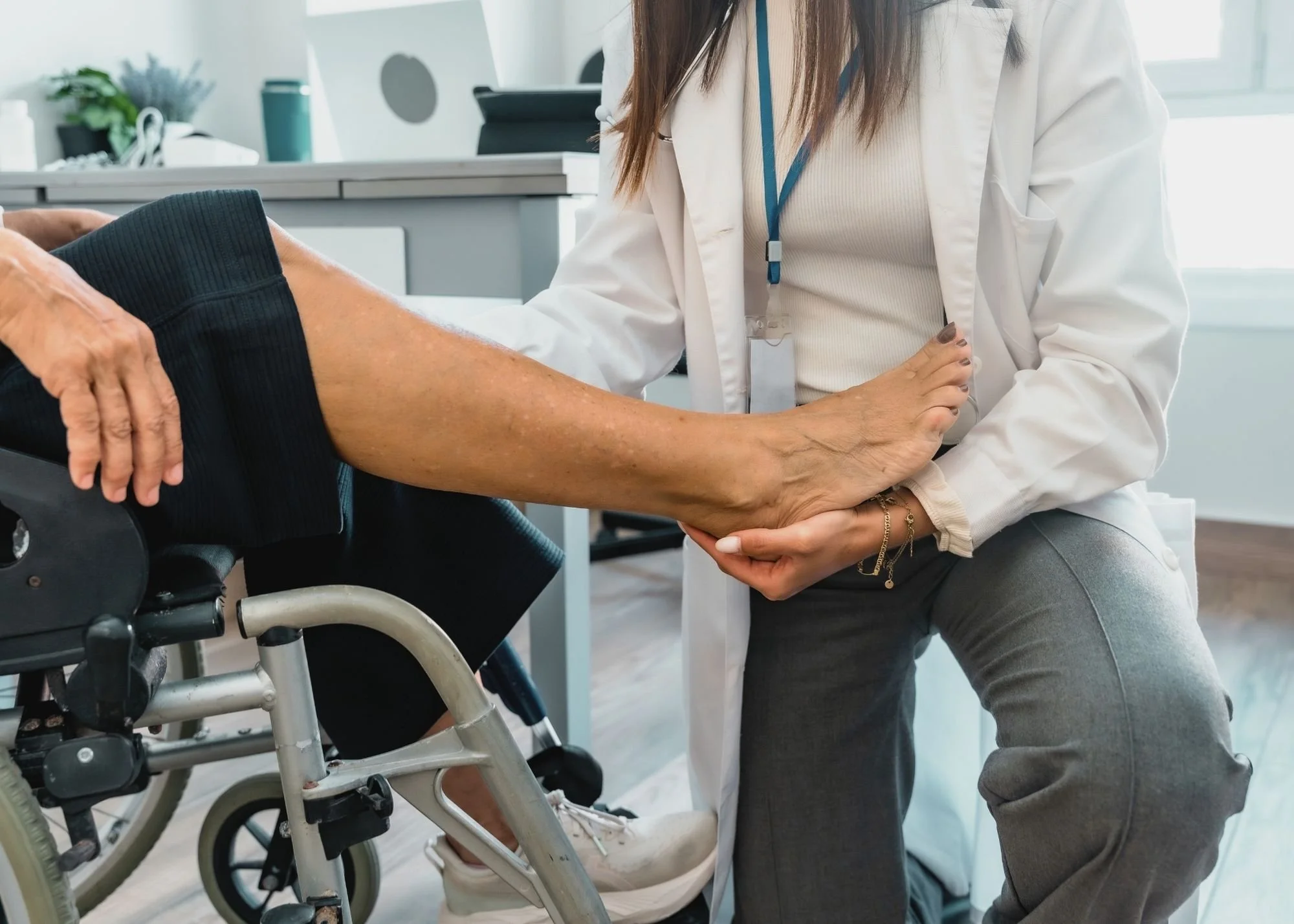
Foot and ankle arthritis is one of the most underrecognized sources of chronic foot pain. Modern arthritic foot care offers genuine options for maintaining mobility, reducing pain, and slowing progression at every stage — including options far less invasive than surgery.
Wheat Ridge
⛰
Boulder
⛰
Arvada
⛰
Lakewood
⛰
Golden
⛰
Edgewater
⛰
Louisville
⛰
Lafayette
⛰
Superior
⛰
Broomfield
⛰
Erie
⛰
Longmont
⛰
Wheat Ridge ⛰ Boulder ⛰ Arvada ⛰ Lakewood ⛰ Golden ⛰ Edgewater ⛰ Louisville ⛰ Lafayette ⛰ Superior ⛰ Broomfield ⛰ Erie ⛰ Longmont ⛰

THE PROBLEM
Twenty-eight bones. Thirty joints. Many places for arthritis to start.
The feet contain twenty-eight bones and over thirty joints, and any of them can develop arthritis. Osteoarthritis is the most common type, caused by cartilage wear over time. Rheumatoid arthritis affects the foot in nearly 90 percent of patients with the disease, often appearing early. Post-traumatic arthritis develops years or decades after a foot or ankle injury.
Many patients accept arthritic foot pain as "part of getting older" and adapt their lives around it. They stop walking the dog as far. They skip the family hike. They give up shoes they love. The reality is that most arthritic foot pain has effective treatment options that can dramatically improve quality of life — even when cure isn't possible.
COMMON SYMPTOMS WE LOOK FOR
— Joint pain with activity. Pain in specific foot or ankle joints that worsens with walking, standing, or use.
— Morning stiffness. Difficulty moving the foot or ankle after waking or after periods of rest.
— Visible joint changes. Swelling, bumps, or visible changes in the shape of the foot over time.
— Reduced range of motion. Difficulty bending the toes, ankle, or midfoot through their full normal motion.
How We Treat It
Care that maintains mobility at every stage.
Effective arthritic foot care starts with identifying the type and stage of arthritis. Osteoarthritis, rheumatoid arthritis, gout, and post-traumatic arthritis all benefit from different treatment approaches. We diagnose specifically before recommending a plan.
Conservative care addresses most cases successfully. Custom orthotics offload painful joints and accommodate deformities. Anti-inflammatory medications, activity modification, and weight management reduce daily pain. For inflammatory arthritis, coordination with rheumatology ensures the underlying disease is managed alongside foot care.
Advanced therapies bridge the gap between conservative care and surgery. Cortisone injections provide targeted relief during flares. Regenerative medicine including PRP injections support cartilage health. Hyaluronic acid injections (viscosupplementation) cushion deteriorating joints in selected cases.
When conservative care isn't enough — typically for severe, advanced arthritis significantly affecting daily life — surgical options including cheilectomy, joint fusion, and joint replacement produce excellent outcomes for the right patients.
TREATMENT OPTIONS WE OFFER FOR ARTHRITIC FOOT CARE
— Anti-Inflammatory Therapy
— Cortisone Injections
— Physical Therapy Referrals

🏆 Best of Mile High 2023
🏆 Best of Mile High 2025
🏆 Best of Mile High 2024
⭐ Nextdoor Neighborhood Fave
Voted Best Podiatrist in the Best of Mile High — three years running.
RECOGNITION
We've been honored to be voted Best Podiatrist in the Best of Mile High in 2023, 2024, and 2025, and we've been named a Neighborhood Fave by Nextdoor. We've also earned a 4.8-star rating from more than 1,300 patients across our two offices. We mention this because we're proud of it — but also because those ratings are built one visit at a time, by real patients who took the time to say something. We don't take that lightly.
how it works
Three steps to walking without pain again.
The path from your first phone call to lasting relief is simpler than most patients expect — and we'll walk you through every part of it.
STEP 1
Call to schedule
Pick the office that's most convenient — Wheat Ridge or Boulder — and call to book. New patients are always welcome, and most insurance plans are accepted.
01
STEP 2
Come in for a thoughtful evaluation
Your first visit is a conversation, not a conveyor belt. We listen to your history, examine what's going on, and use in-office digital X-rays or musculoskeletal ultrasound if we need a closer look.
02
STEP 3
Start a plan built around you
You'll leave understanding your condition, your options, and exactly what the next step looks like. No pressure, no upsell — just steady care.
03
Related Resources
Keep reading from our patient education library.
Advanced Treatment
Regenerative medicine
PRP and regenerative therapies offer cartilage support for early-stage arthritis before surgery is needed.
Blog ·Inflammatory
Early-onset gout: symptoms, management, and what's behind the rising rates
Gout is a form of inflammatory arthritis increasingly affecting younger adults. Here's what to know.
Treatment Service
Geriatric foot care
The single most impactful long-term treatment for plantar fasciitis tied to flat feet, fallen arches, or biomechanical issues.
Blog ·Aging
Foot exercises and care for older adults: staying steady at every age
Exercise and care strategies that protect arthritic joints and maintain mobility into older age.
Related Condition
Bunions
Bunions are often associated with arthritis of the big toe joint. Learn how the two conditions interact and what treatment options exist.
Blog · Deep Dive
Arthritic foot care: managing foot and ankle arthritis
A complete guide to arthritis types, treatment approaches, and what to expect at each stage.
ANSWERS TO COMMON QUESTIONS
What patients ask about arthritic foot care.
-
No — arthritis itself cannot be reversed once cartilage has been damaged. However, arthritis can be effectively managed with treatment that reduces pain, maintains mobility, and slows progression. Many patients live productively with foot arthritis for decades with the right care plan.
The goal of arthritic foot care isn't cure — it's preservation of function and quality of life. Custom orthotics, activity modification, weight management, anti-inflammatory therapy, and selective injections allow most patients to remain active and comfortable. For specific situations, regenerative medicine and surgical options can dramatically improve outcomes when conservative care is no longer enough.
-
Treatment for big toe arthritis depends on severity. Early-stage hallux rigidus often responds to stiff-soled shoes, orthotics with rocker bottoms, and anti-inflammatory care. Moderate cases benefit from cortisone injections or cheilectomy (removing bone spurs). Advanced cases may require joint fusion or replacement.
The big toe joint bears significant weight during walking and push-off, which is why arthritis here can be particularly disabling. Modern treatment offers a graduated approach: start with the least invasive option that effectively manages your symptoms, escalate only as needed. Many patients with big toe arthritis live decades with conservative management and never require surgery.
-
Yes — staying active with arthritis is generally beneficial, though high-impact activities may need to be modified. Low-impact options like swimming, cycling, water aerobics, and walking on softer surfaces protect arthritic joints while maintaining cardiovascular fitness, muscle strength, and joint range of motion.
Inactivity actually accelerates arthritis-related stiffness and weakness. The key is matching activities to your specific arthritis pattern and joint health. For Boulder and Front Range patients who love hiking and trail running, modifications like trekking poles, supportive footwear, custom orthotics, and route selection can keep you moving for years longer than you might expect. We help you find the right balance.
-
Surgery is generally considered when conservative care isn't adequately controlling pain, when arthritis is significantly affecting daily activities, or when joint deformity is progressive and developing secondary problems. Most patients with foot arthritis don't need surgery — but for those who do, modern procedures produce excellent outcomes.
Surgical options range from minimally invasive procedures like cheilectomy (removing bone spurs to preserve joint motion) to joint fusion and joint replacement. The right choice depends on the specific joint, severity, your activity level, and overall health. Our surgical team evaluates honestly — many patients who think they need surgery turn out to do well on a refined conservative plan.
-
Yes, most major insurance plans cover arthritic foot evaluation and treatment, including office visits, imaging, injections, and surgical procedures when warranted. Table Mountain Foot & Ankle accepts most major insurance plans, Medicare, and workers' compensation.
Coverage for specific treatments varies by plan — custom orthotics may be partially covered, regenerative medicine is sometimes considered elective, and surgical procedures generally require pre-authorization. Our front office team verifies benefits before treatment so there are no surprises.

READY WHEN YOU ARE
Call to schedule your visit.
We see patients from across the Denver metro area at our Wheat Ridge and Boulder offices. Both locations are accepting new patients, and both offer free parking. Call whichever office is most convenient — we'll take it from there.