
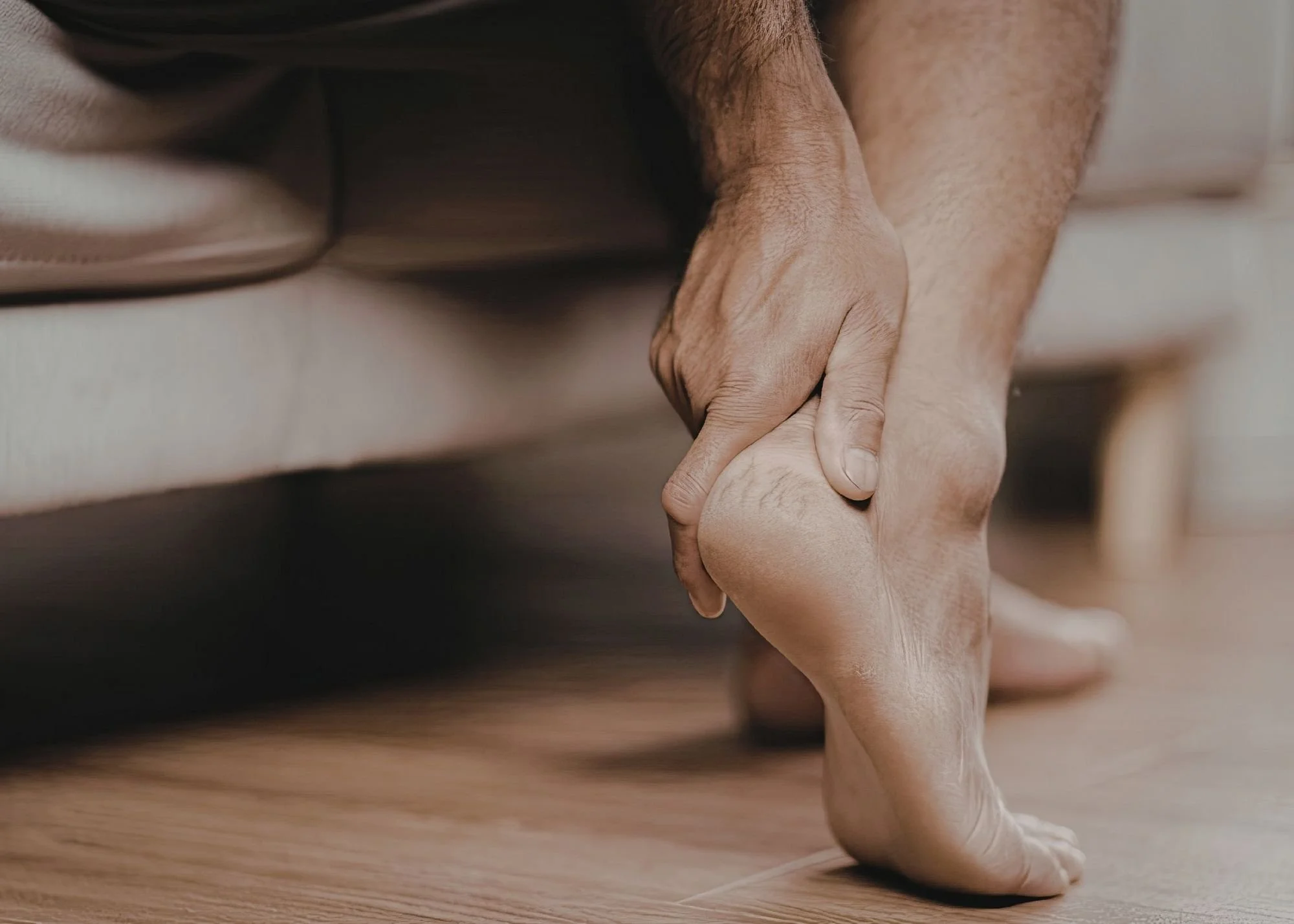
Conditions · Achilles Tendon
The largest tendon in your body deserves more than rest and ice.
Achilles tendon pain shuts down runners faster than almost any other foot or ankle injury — and it rarely resolves with rest alone. Whether you're managing chronic tendinopathy, an acute strain, or recovery from a rupture, the path forward starts with an accurate diagnosis from a podiatrist who treats Achilles injuries every week.
Wheat Ridge
⛰
Boulder
⛰
Arvada
⛰
Lakewood
⛰
Golden
⛰
Edgewater
⛰
Louisville
⛰
Lafayette
⛰
Superior
⛰
Broomfield
⛰
Erie
⛰
Longmont
⛰
Wheat Ridge ⛰ Boulder ⛰ Arvada ⛰ Lakewood ⛰ Golden ⛰ Edgewater ⛰ Louisville ⛰ Lafayette ⛰ Superior ⛰ Broomfield ⛰ Erie ⛰ Longmont ⛰
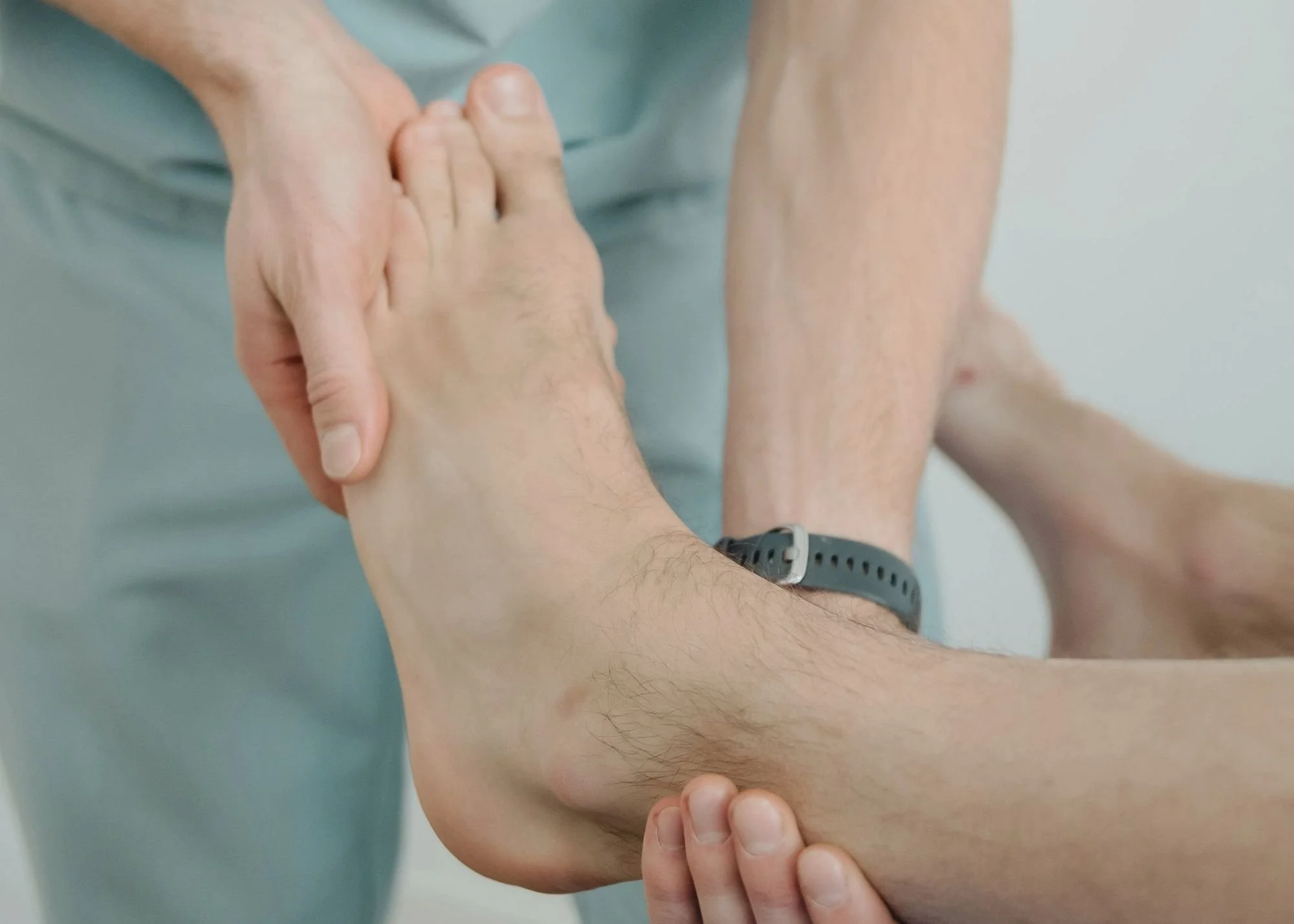
THE PROBLEM
Three different conditions, one tendon under strain.
Achilles tendon problems aren't a single diagnosis. Achilles tendonitis is acute inflammation of the tendon, usually from a sudden increase in activity. Achilles tendinosis is chronic degeneration of the tendon's collagen structure from repetitive stress without adequate recovery — and despite the name, inflammation isn't the primary issue. Achilles ruptures are partial or complete tears, often presenting as a sudden "pop" followed by inability to push off.
The distinction matters because the treatments differ significantly. Anti-inflammatory medications can actually slow healing in tendinosis but are essential for tendonitis. Treating the wrong condition extends your recovery timeline by months — which is why an accurate evaluation from a podiatrist is the right starting point, not a generic protocol pulled from the internet.
COMMON SYMPTOMS WE LOOK FOR
— Morning stiffness. Pain or tightness in the back of the heel after waking or after sitting still.
— Pain that warms up. Discomfort that improves during activity, then returns or worsens afterward.
— Visible thickening. Swelling or palpable thickening along the tendon, often with creaking sensations.
— Sudden popping sensation. A snap or feeling of being kicked in the leg — a warning sign of rupture requiring immediate care.
How We Treat It
Achilles tendon care starts with identifying which version of the problem you're dealing with — tendonitis, tendinosis, or partial tear. We use clinical examination, gait analysis, and imaging when warranted to pinpoint the diagnosis before recommending treatment.
For most cases, conservative care including eccentric loading exercises, calf stretching, custom orthotics, and activity modification produces meaningful improvement within weeks. Boulder runners and Front Range trail athletes benefit especially from biomechanical correction that addresses the underlying gait patterns.
A treatment plan matched to the actual condition.
When chronic tendinosis has set in, advanced therapies become valuable. Our sports medicine team uses radial shockwave therapy, regenerative medicine, and platelet-rich plasma injections to stimulate healing in tendons that haven't responded to first-line care.
Ruptures are an entirely different conversation. Whether surgical or non-surgical management is best depends on the patient, the injury, and the activity goals. We evaluate honestly and refer when surgical reconstruction is the right path forward.
TREATMENT OPTIONS WE OFFER FORACHILLES TENDON PROBLEMS
— Eccentric Loading Programs
— Heel Lifts
— Physical Therapy Coordination

🏆 Best of Mile High 2023
🏆 Best of Mile High 2025
🏆 Best of Mile High 2024
⭐ Nextdoor Neighborhood Fave
Voted Best Podiatrist in the Best of Mile High — three years running.
RECOGNITION
We've been honored to be voted Best Podiatrist in the Best of Mile High in 2023, 2024, and 2025, and we've been named a Neighborhood Fave by Nextdoor. We've also earned a 4.8-star rating from more than 1,300 patients across our two offices. We mention this because we're proud of it — but also because those ratings are built one visit at a time, by real patients who took the time to say something. We don't take that lightly.
how it works
Three steps to walking without pain again.
The path from your first phone call to lasting relief is simpler than most patients expect — and we'll walk you through every part of it.
STEP 1
Call to schedule
Pick the office that's most convenient — Wheat Ridge or Boulder — and call to book. New patients are always welcome, and most insurance plans are accepted.
01
STEP 2
Come in for a thoughtful evaluation
Your first visit is a conversation, not a conveyor belt. We listen to your history, examine what's going on, and use in-office digital X-rays or musculoskeletal ultrasound if we need a closer look.
02
STEP 3
Start a plan built around you
You'll leave understanding your condition, your options, and exactly what the next step looks like. No pressure, no upsell — just steady care.
03
Related Resources
Keep reading from our patient education library.
Advanced Treatment
Regenerative medicine
PRP and regenerative injections accelerate healing in chronic Achilles tendinopathy that hasn't responded to conservative care.
Blog · Footwear
Arch support & running shoes: a guide for active Coloradans
Worn-out shoes are a leading contributor to Achilles strain. Here's how to choose the right pair for your gait.
Treatment Service
Sports medicine
Achilles care for runners and athletes integrates training adjustments alongside clinical treatment.
Blog · Self-Care
Foot exercises for strong, pain-free feet
Eccentric heel drops and calf stretches that protect the Achilles tendon and prevent recurrence.
Related Condition
Ankle sprains
Many lingering Achilles issues actually start with an ankle sprain that didn't fully resolve. Here's how to tell.
Blog · Deep Dive
Achilles tendon pain in runners: causes, symptoms, and treatment
A complete guide to Achilles tendonitis vs tendinosis vs rupture — what they feel like and how a podiatrist tells them apart.
COMMON QUESTIONS
Quick answers before you call.
-
Most cases of Achilles tendonitis improve within 4 to 8 weeks of consistent treatment, while chronic Achilles tendinosis can take 3 to 6 months to fully resolve. Recovery from an Achilles rupture typically takes 6 to 12 months depending on whether surgical or non-surgical management is used.
Patients who start eccentric loading exercises and address contributing factors like tight calves and inappropriate footwear early in the process recover dramatically faster. Boulder and Front Range runners often benefit from coordinated care between podiatry, physical therapy, and gradual return-to-running protocols. The biggest factor in recovery time is how quickly the right diagnosis is made and the right treatment started — pushing through Achilles pain is the single most common reason recovery stalls.
-
Achilles tendonitis is acute inflammation of the tendon, while Achilles tendinosis is chronic degeneration of the tendon's collagen without significant inflammation. They share symptoms but require different treatments — anti-inflammatory medications help tendonitis but can slow healing in tendinosis.
The distinction is critical for choosing the right care. Tendonitis responds to ice, NSAIDs, rest, and gradual return to activity. Tendinosis requires a different approach focused on stimulating tendon remodeling — eccentric loading exercises, shockwave therapy, regenerative medicine, and progressive loading rather than rest. Many runners diagnosed with "Achilles tendonitis" actually have tendinosis after months of unresolved pain, which is why an updated diagnosis often unlocks recovery that had stalled.
-
Mild Achilles tendonitis often allows continued running with reduced mileage, softer surfaces, and consistent eccentric loading exercises. Significant pain or any signs of partial rupture require a temporary running pause to allow healing — pushing through severe Achilles pain risks complete rupture.
For Boulder and Front Range runners, this often means temporarily swapping the steepest trail climbs for flatter routes during recovery, since uphill running places sustained strain on the tendon. Our sports medicine team works with runners across every level to find the right balance between maintaining fitness and protecting the tendon. The runners who recover fastest are the ones who pull back early and address contributing factors rather than running through pain until something tears.
-
An Achilles tendon rupture typically presents as a sudden sharp pain in the back of the leg, often described as feeling like being kicked, accompanied by an audible pop. After the injury, you'll have difficulty pushing off the foot, walking on tiptoe, or feeling normal calf strength.
If you suspect an Achilles rupture, seek medical care immediately rather than waiting it out — early treatment dramatically improves outcomes. The Thompson test, performed by a podiatrist, can quickly identify whether the tendon is intact. Ultrasound or MRI confirms the diagnosis. Both surgical and non-surgical management options exist, with the right choice depending on your activity level, age, and goals. We evaluate honestly and recommend the path that makes sense for your specific situation.
-
Yes, most major insurance plans cover Achilles tendon evaluation and treatment, including office visits, imaging, physical therapy referrals, and many treatment options. Table Mountain Foot & Ankle accepts most major insurance plans, Medicare, and workers' compensation.
Specific coverage varies by plan, particularly for advanced treatments like radial shockwave therapy or regenerative medicine, which are sometimes considered elective. Custom orthotics may be partially covered depending on your plan and diagnosis. Our front office team verifies your specific benefits before your appointment so there are no surprises — just call either location to get started.

READY WHEN YOU ARE
Call to schedule your visit.
We see patients from across the Denver metro area at our Wheat Ridge and Boulder offices. Both locations are accepting new patients, and both offer free parking. Call whichever office is most convenient — we'll take it from there.