Foot Wound Care: Reconstructive Options for Complex Wounds and Diabetic Ulcers
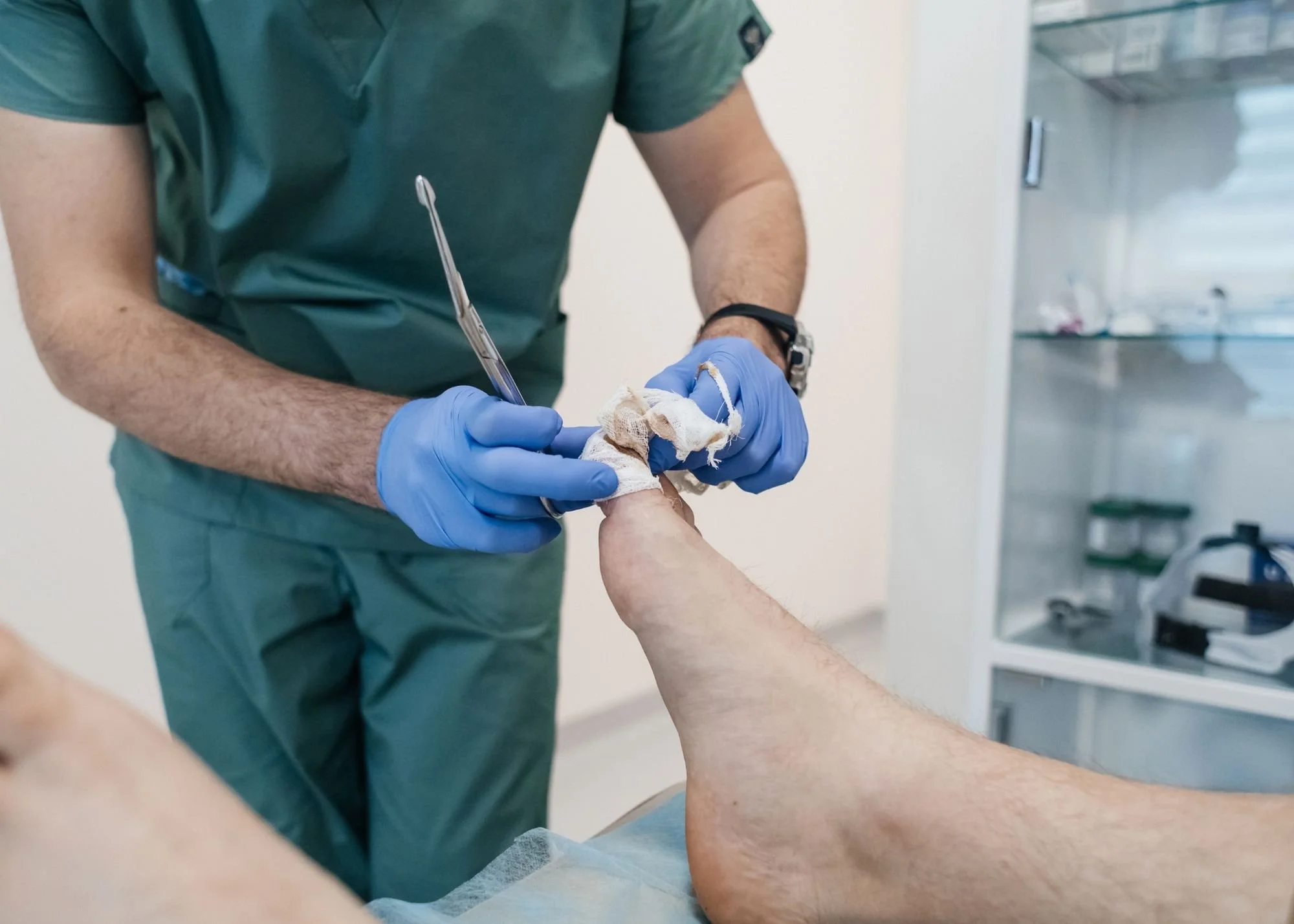
Most cuts and scrapes heal without intervention. The body knows how to repair its own surface, and a normal healthy person rarely needs to think about wound care beyond cleaning and bandaging a minor injury. But when a wound on the foot doesn't heal — because of diabetes, vascular disease, immune compromise, or trauma severity — it becomes a different kind of medical problem entirely.
Complex foot wounds are one of podiatry's most consequential specialties. The difference between an ulcer that heals and one that doesn't can be the difference between full recovery and limb loss. Understanding how wounds heal, what disrupts that process, and the increasingly sophisticated reconstruction options available helps explain why specialized care matters for problem wounds.
How the Skin Heals: A Brief Tour
Healing requires the skin's normal architecture to work properly. Three layers, each with distinct functions:
Epidermis. The outermost layer. Acts as a waterproof, protective barrier and contains pigment cells. Has no blood supply of its own — it draws nutrients from the layer beneath.
Dermis. The middle layer. Contains blood vessels, nerves, hair follicles, sweat glands, and the connective tissue that gives skin its strength. Most of the work of healing happens here.
Subcutaneous tissue (hypodermis). The deepest layer. Contains fat, connective tissue, larger blood vessels, and nerves. Acts as insulation and energy storage. When wounds reach this layer, they're considered full-thickness.
The Phases of Wound Healing
Normal wound healing proceeds in four overlapping phases:
Hemostasis (immediate). Blood vessels constrict, platelets aggregate, and clotting factors create a temporary plug.
Inflammation (days 1-5). White blood cells clear bacteria and debris. Redness, warmth, and swelling are normal during this phase.
Proliferation (days 5-21). New tissue forms. Capillaries grow into the wound bed (granulation tissue), skin cells migrate to close the wound surface, and collagen begins replacing the temporary matrix.
Remodeling (weeks to months). Collagen reorganizes, the new tissue strengthens, and the scar matures. Mature scar tissue typically reaches about 80% of original skin strength.
What Disrupts Wound Healing
Wounds that don't heal in the expected timeframe (typically 4-6 weeks for most foot wounds) are called chronic wounds. The disruption usually comes from one or more of these factors:
Poor circulation. Wounds need oxygen and nutrients delivered through blood flow. Peripheral vascular disease, diabetes, smoking, and certain medications all impair circulation.
Infection. Bacterial colonization at high levels prevents the inflammation phase from resolving and consumes resources needed for healing.
Pressure. Continuous mechanical pressure on a wound prevents new tissue from forming. This is particularly problematic for foot wounds, where weight-bearing reapplies pressure with every step.
Diabetes. Elevated blood sugar impairs immune function, slows tissue repair, and damages small blood vessels. Diabetic foot ulcers are the most common chronic wounds podiatrists treat.
Nutritional deficiencies. Protein, vitamin C, zinc, and other nutrients are essential for healing.
Immune compromise. Steroids, chemotherapy, immunosuppressants, and conditions affecting immune function all delay healing.
Repeated trauma. Wounds that experience ongoing injury can't complete the healing cycle.
Types of Chronic Foot Wounds
Diabetic neuropathic ulcers. Form on weight-bearing areas (typically the ball of the foot or under the big toe) due to repetitive pressure on insensate tissue.
Ischemic ulcers. Caused by inadequate blood supply. Often on the toes or other areas with limited circulation.
Venous stasis ulcers. Result from poor venous return, typically affecting the lower leg above the ankle.
Pressure ulcers. Develop where bone is close to the skin and sustained pressure damages tissue. Often on the heel.
Surgical wounds with healing complications. After foot surgery, wound healing problems can develop in patients with risk factors.
Traumatic wounds. Severe injuries with tissue loss that exceed the body's natural healing capacity.
The Reconstructive Ladder
Reconstructive surgeons think about wound closure as a "ladder" — a hierarchy of options from simplest to most complex. The principle is to choose the simplest approach that will work for the specific wound. The major rungs:
Rung 1: Secondary Intention (Letting It Heal Naturally)
Many smaller wounds can simply be cleaned, dressed, and allowed to heal on their own through granulation and contraction. This is appropriate for shallow wounds with adequate circulation in non-pressure areas.
Rung 2: Primary Closure
Bringing the wound edges together and closing with sutures, staples, or skin glue. Works for clean wounds with minimal tissue loss and good blood supply at the edges.
Rung 3: Skin Grafts
Transferring a thin layer of skin from another area (the donor site) to cover the wound. Two types:
Split-thickness grafts: Thinner; cover larger areas; require less ideal recipient beds
Full-thickness grafts: Better cosmetic and functional outcome; require more pristine recipient beds
Skin grafts require a wound bed with adequate blood supply to "take" — they need new blood vessels to grow into them within days of placement.
Rung 4: Local Tissue Flaps
When the wound bed isn't healthy enough for a graft, or when deeper structures (tendon, bone) are exposed, tissue flaps from nearby areas can be moved to cover the wound while bringing their own blood supply. Various designs (rotation, advancement, transposition) are used depending on location and wound shape.
Rung 5: Distant Flaps and Microsurgical Techniques
For complex wounds where local options aren't available, tissue can be transferred from distant body sites using microsurgical techniques — connecting tiny blood vessels under a microscope. These procedures are most often used for major trauma, oncologic reconstruction, or limb salvage.
Modern Adjunctive Therapies
Beyond traditional reconstruction, several advanced therapies enhance wound healing:
Negative pressure wound therapy (vacuum-assisted closure)
Bioengineered skin substitutes
Platelet-rich plasma (PRP) treatments
Hyperbaric oxygen therapy
Growth factor applications
Cellular and acellular tissue products
Comprehensive Wound Care Approach
Effective foot wound care isn't just about closing the wound — it's about creating the conditions for healing. A complete approach includes:
Vascular assessment and intervention if circulation is impaired
Tight blood sugar control for diabetic patients
Pressure offloading (boots, casts, custom devices)
Treatment of any infection
Debridement of dead or compromised tissue
Appropriate dressings matched to wound characteristics
Nutritional optimization
Smoking cessation
Treatment of underlying conditions affecting healing
Patient education on home care
Frequent follow-up and reassessment
When to Seek Specialized Wound Care
Most foot wounds heal with basic care. Specialized evaluation is warranted for:
Any wound that hasn't shown progress within 2-3 weeks of standard care
Wounds in patients with diabetes, vascular disease, or immune compromise
Deep wounds exposing tendon, bone, or other deep structures
Wounds with signs of infection (spreading redness, fever, drainage, increased pain)
Recurrent wounds in the same location
Wounds where standard treatment has failed
Wounds in patients who have had previous amputations
For diabetic patients, any new foot wound — even small ones — should be evaluated promptly rather than treated at home.
Prevention: The Best Wound Care
Most chronic foot wounds in high-risk patients are preventable:
Daily foot inspection (especially for diabetic patients)
Properly fitted footwear
Custom orthotics or therapeutic shoes when indicated
Regular professional foot exams
Tight diabetic control
Smoking cessation
Treatment of foot deformities before they cause skin breakdown
Prompt evaluation of any new skin changes
When to See a Podiatrist
Don't wait for a wound to become a major problem. Schedule an appointment for:
Any non-healing wound on the foot
Wounds with signs of infection
Diabetic patients with any new foot break
Recurrent ulcerations
Wounds following surgery that aren't healing as expected
Patients with risk factors for chronic wounds
At Table Mountain Foot and Ankle, wound care is integrated into our broader practice. We work closely with vascular specialists, endocrinologists, and reconstructive surgeons when complex wounds require coordinated care — and we know when to escalate to advanced therapies. Schedule an appointment to address a wound before it becomes a complication.