Plantar Warts: Symptoms, Risks, and Treatment Options
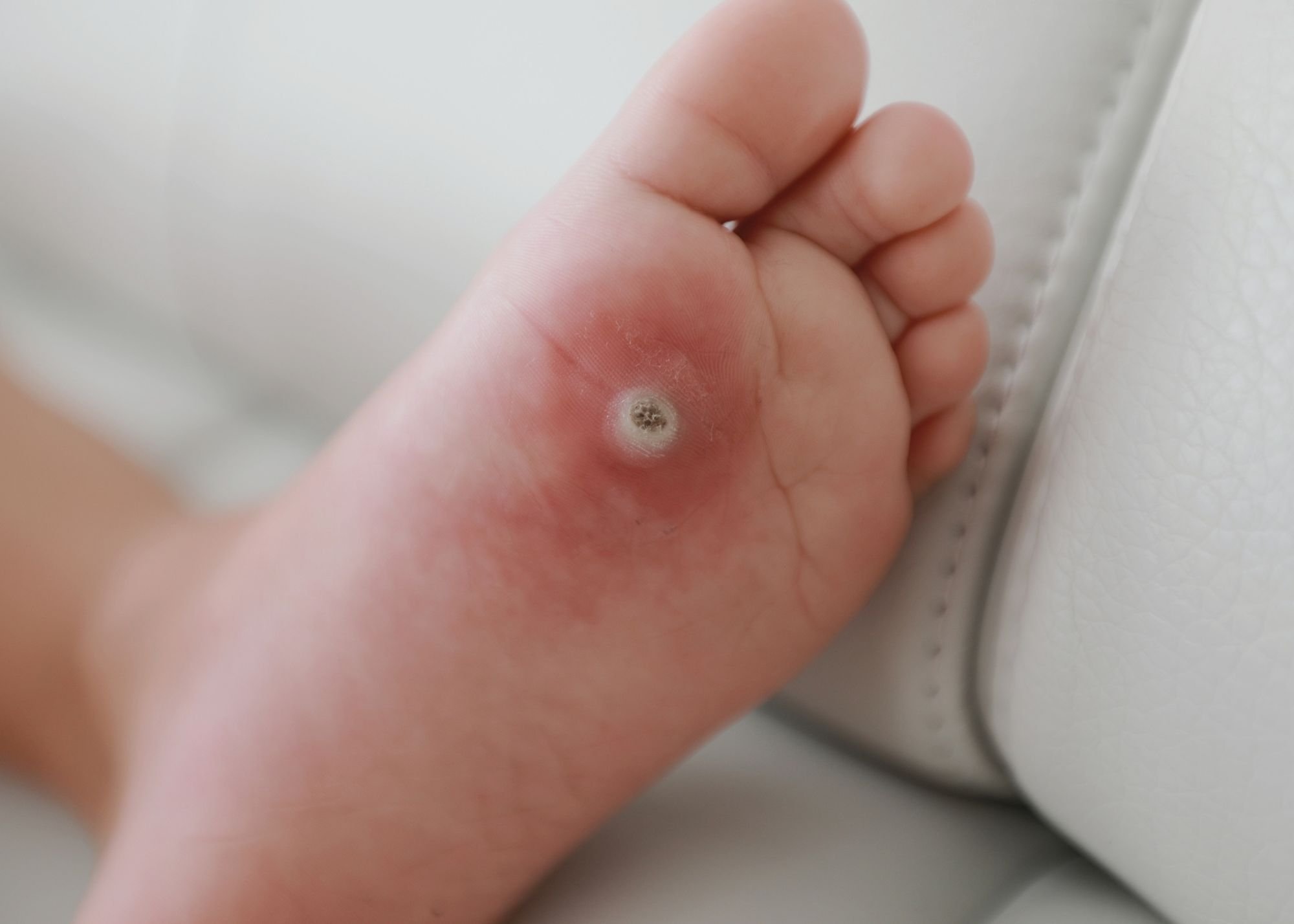
Plantar warts are one of those conditions that's simultaneously common and frustrating — most people will get one at some point in their lives, and they're notorious for being stubborn to treat. They're caused by a virus, they hide under tough skin, they often look like calluses, and many over-the-counter treatments only partially work.
Understanding plantar warts — what they are, how they spread, what works to treat them — saves a lot of time, frustration, and unnecessary contagion.
What Is a Plantar Wart?
A plantar wart is a benign skin growth caused by infection with human papillomavirus (HPV). Of the many strains of HPV, types 1, 2, 4, 27, and 57 most commonly cause warts on the feet.
Plantar warts grow inward rather than outward (unlike warts on other parts of the body), because the constant pressure of weight-bearing pushes the wart into the skin rather than allowing it to grow up. This is why they often develop a thick callus on top — the skin's response to the irritation.
Symptoms
A small, rough growth on the bottom of the foot
Hardened or thickened skin over a defined spot (often mistaken for a callus)
Small black dots within the wart (thrombosed capillaries — clotted blood vessels)
Pain when walking or standing, especially with direct pressure
Pain that's worse when the wart is squeezed from the sides than when pressed directly
Multiple warts clustered together (mosaic warts)
Interruption of the skin lines (dermatoglyphs) of the foot — they don't continue across a wart the way they do across a callus
How Plantar Warts Spread
HPV thrives in warm, moist environments and enters through small breaks in the skin:
Walking barefoot in locker rooms, public showers, pool areas
Direct contact with someone else's wart
Sharing towels, socks, or footwear
Self-spread to other parts of your own foot through scratching or picking
The virus can survive on surfaces for some time, which is why public spaces are common transmission sources. People with compromised immune systems, those with damaged or wet skin, and children are particularly susceptible.
Plantar Wart vs. Callus: How to Tell the Difference
Both look similar at first glance:
Plantar warts interrupt the skin lines and often have visible black dots. They typically hurt more when squeezed from the sides than with direct pressure.
Calluses have skin lines that continue uninterrupted across them. They typically hurt with direct pressure but not when squeezed from the sides.
Misidentifying a wart as a callus can lead to inappropriate treatment that doesn't work and may spread the virus.
Treatment Options
Watchful Waiting
Many plantar warts resolve on their own as the immune system gradually clears the virus, though this can take months to years. For asymptomatic warts in healthy patients, this is sometimes a reasonable approach.
Over-the-Counter Treatments
Salicylic acid pads or liquids (the most common OTC option) — work by gradually dissolving the wart tissue
Cryotherapy products (over-the-counter freezing kits)
Duct tape occlusion (mixed evidence but inexpensive and harmless)
OTC treatments require consistency over weeks or months and have variable success rates. They're reasonable starting points for simple, accessible warts in patients without complicating factors.
In-Office Treatments
When OTC approaches haven't worked or aren't appropriate:
Cryotherapy with liquid nitrogen (more powerful than OTC freezing)
Cantharidin application
Prescription-strength salicylic acid
Curettage (scraping off the wart)
SWIFT® Therapy
Surgical excision for resistant warts
Multiple treatments are often needed. The right choice depends on wart location, size, number, depth, and patient factors.
Special Considerations for Diabetic Patients
For patients with diabetes, plantar warts should not be self-treated. Salicylic acid products can damage healthy skin, and any skin breaks create infection risk. Professional management is the appropriate standard.
Prevention
Wear shower shoes or sandals in locker rooms, public showers, and pool decks
Keep feet clean and dry
Don't share towels, socks, or shoes
Avoid touching warts (yours or anyone else's)
Don't scratch or pick at warts — this spreads them
Cover existing warts with a bandage during pool/gym use
Change socks daily and after exercise
Maintain a healthy immune system
When to See a Podiatrist
You're not sure whether you have a wart or a callus
Over-the-counter treatments haven't resolved the wart in 6-8 weeks
You have multiple warts or warts spreading
Pain is significant or limiting your activities
You have diabetes or compromised circulation
Warts are large or in difficult locations (under the heel, on weight-bearing areas)
Children or elderly family members have warts that need treatment
At Table Mountain Foot and Ankle, we treat plantar warts effectively, including resistant cases. Schedule an appointment to clear them efficiently and prevent further spread.