Exercises for Strong, Pain-Free Feet
Most people exercise everything but their feet. We strengthen our cores, train our cardio, work on our hip mobility — and then ask our feet to support all of that effort with whatever inherent strength they happen to have. The result is feet that fatigue easily, contribute poorly to athletic performance, and become vulnerable to the kinds of injuries that consistent foot training would prevent.
Foot exercises take only a few minutes a day. They don't require equipment, gym memberships, or significant time. And the payoff — in pain reduction, performance improvement, and injury prevention — is substantial.
Why Foot Strength Matters
The feet contain over 100 muscles, 28 bones, and 30 joints — and they're responsible for:
Supporting your entire body weight with every step
Absorbing shock during walking, running, and jumping
Generating propulsion during push-off
Adapting to uneven surfaces
Providing balance feedback to the brain
Maintaining the arches that distribute load efficiently
Weak feet can't do these jobs efficiently. Other parts of the body compensate, and over time, those compensations create their own problems — knee pain, hip issues, back pain, and chronic foot conditions.
Daily Foundation Exercises
These exercises target the small intrinsic muscles of the foot — the muscles most commonly weak in modern feet that spend their lives in supportive shoes.
1. Toe Yoga
Sit with feet flat on the floor. Try to lift only your big toe while keeping the other four toes pressed down. Hold for 3 seconds, then release. Now reverse: keep the big toe down while lifting the other four toes.
This sounds simple, but most people can't do it well at first. Practicing it builds the neural connections and muscle independence that improve foot function. Do 10 reps each direction, both feet.
2. Towel Scrunches
Place a small towel on the floor in front of you. Sit with your feet flat on the towel. Curl your toes to grip and bunch the towel toward you. Continue until you've drawn the entire towel under your feet. Stretch the towel back out and repeat.
Strengthens the arch and the small muscles that support proper foot mechanics. 2-3 sets per foot.
3. Marble Pickups
Place 10-20 marbles on the floor along with a small bowl. Use your toes to pick up each marble and drop it into the bowl. Continue until all marbles are in the bowl, then dump them out and repeat.
Builds dexterity, grip strength, and toe independence. Substitute small objects (pebbles, dried beans) if marbles aren't available.
4. Toe Spreads
Sit or stand with feet flat. Spread your toes apart as wide as possible — try to create visible separation between each toe. Hold for 5 seconds, then release. Repeat 10 times.
Counteracts the constant compression of toes by shoes and rebuilds natural toe splay.
5. Short Foot Exercise
Sit with feet flat on the floor. Without curling your toes, try to "shorten" your foot by drawing the ball of the foot toward the heel — as if you're shortening the arch. Your toes should remain flat on the ground; only the foot itself should change shape. Hold for 5 seconds.
Activates the deep arch muscles that support the foot during weight-bearing. Difficult to do correctly at first; once mastered, it's a core exercise for foot health. 10 reps per foot.
Strengthening Exercises
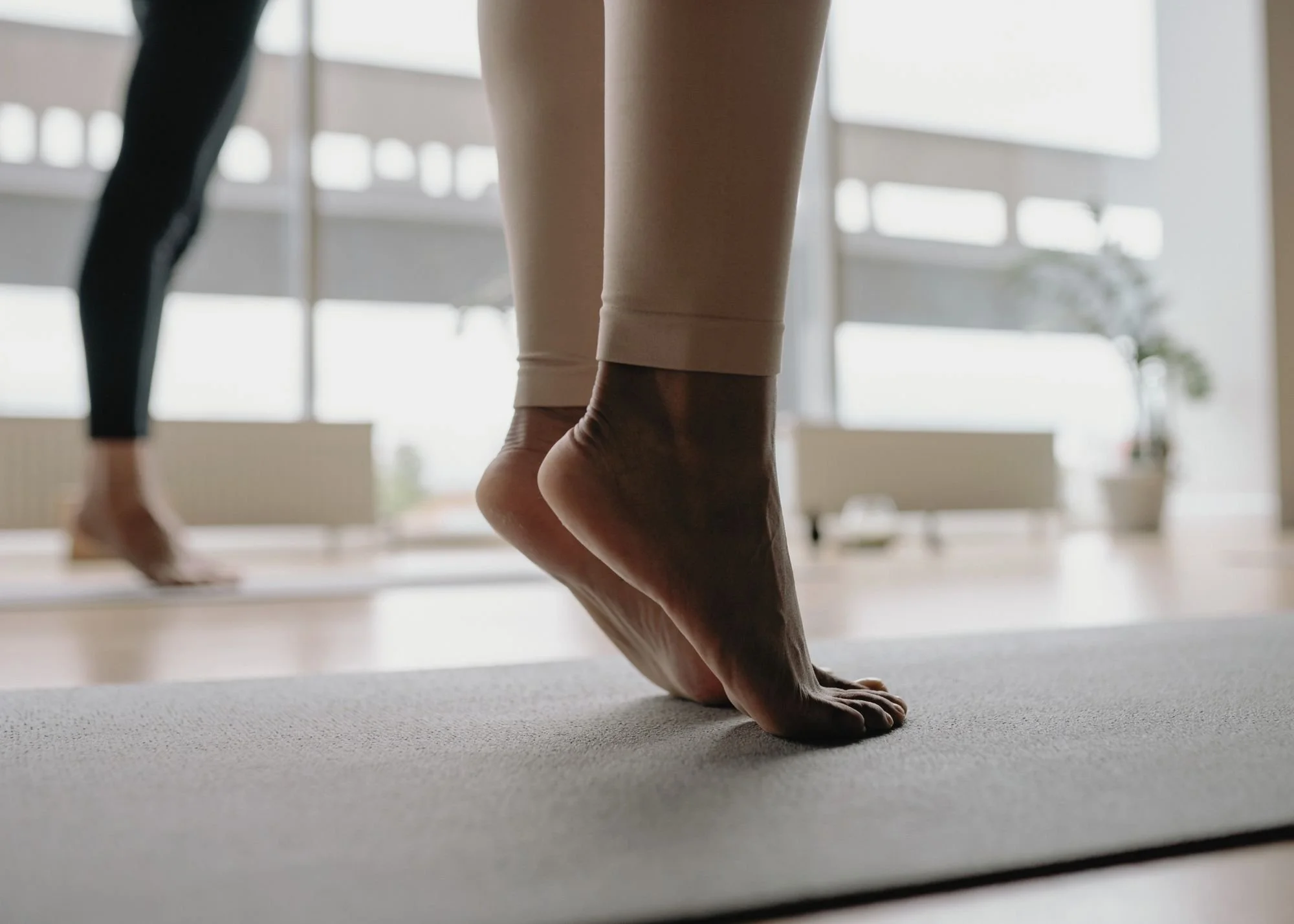
6. Heel Raises
Stand near a wall or sturdy surface for support. Slowly rise onto the balls of your feet, hold for 2 seconds, then lower with control. Do 15-20 reps for 2-3 sets.
Strengthens the calves and Achilles tendon, both of which support proper foot mechanics. Progress to single-leg heel raises as you get stronger.
7. Eccentric Heel Drops
Stand with the balls of your feet on a step, heels hanging off the edge. Rise onto your toes using both legs, then transfer your weight to one leg and slowly lower the heel below the level of the step over a count of 5 seconds.
This eccentric loading is the gold standard for both treating and preventing Achilles tendon problems. 3 sets of 15 per leg.
8. Single-Leg Balance
Stand on one foot for 30-60 seconds. Once that's easy, try with eyes closed. Once that's easy, try while brushing your teeth or doing other tasks.
Trains the small stabilizing muscles and the proprioceptive system. Crucial for preventing falls and ankle sprains. 2-3 sets per leg.
Flexibility Exercises
9. Calf Stretch
Stand facing a wall with hands at shoulder height. Step one foot back, keeping the heel on the ground and the back leg straight. Lean forward until you feel a stretch in your calf. Hold 30 seconds. Switch sides.
Tight calves contribute to many foot problems including plantar fasciitis. Daily stretching makes a meaningful difference.
10. Soleus Stretch
Same position as the calf stretch above, but bend the back knee. This targets the deeper soleus muscle, which is often overlooked.
11. Plantar Fascia Stretch
Sit with one ankle crossed over the opposite knee. Use your hand to pull your toes back toward your shin until you feel a stretch along the arch and the back of the heel. Hold 30 seconds. 3 reps per foot.
Particularly valuable for plantar fasciitis prevention and treatment.
12. Tennis Ball Roll
Place a tennis ball or massage ball under one foot. Slowly roll it back and forth from heel to toes for 1-2 minutes per foot. Apply pressure to find tender areas and pause on them.
Self-myofascial release for the plantar fascia and small foot muscles. Excellent both before and after activity.
Programming Suggestions
Daily Maintenance Routine (5-10 minutes)
Toe yoga (1 minute)
Towel scrunches (1 minute per foot)
Calf stretch (1 minute per side)
Tennis ball roll (1-2 minutes per foot)
Weekly Strengthening Routine (15-20 minutes, 2-3 times per week)
Toe yoga
Marble pickups
Short foot exercise
Heel raises (progress to single-leg as able)
Eccentric heel drops
Single-leg balance
Calf and plantar fascia stretches
Sport-Specific Programming
For runners, hikers, and other athletes, foot exercises should be considered part of training rather than separate from it. Our sports medicine team can help you build foot strength specifically aligned with your activities.
Common Mistakes to Avoid
Doing exercises only when feet hurt (consistency matters more than intensity)
Pushing through sharp pain (discomfort is fine; pain is a signal to stop)
Skipping the small intrinsic muscle work in favor of "real" exercises like heel raises
Doing the exercises in shoes (most are more effective barefoot)
Expecting overnight results (consistent practice over weeks produces meaningful change)
When Exercises Aren't Enough
Foot exercises are a cornerstone of foot health, but they're not a cure for everything. Some conditions — significant deformities, advanced arthritis, severe biomechanical issues — require additional intervention like custom orthotics, professional treatment, or in some cases, surgical correction. Exercises work best as part of a comprehensive approach to foot health.
When to See a Podiatrist
Persistent foot pain despite consistent exercise
Pain that's getting worse
Inability to do the basic exercises (suggests significant weakness or restriction)
Foot deformities or structural issues
Recurring injuries despite training
You want exercises tailored specifically to your foot mechanics
At Table Mountain Foot and Ankle, we incorporate exercise prescription into care for active patients across every level. Schedule an appointment for a foot evaluation that includes a personalized exercise program.