The Importance of Biomechanics in Podiatry
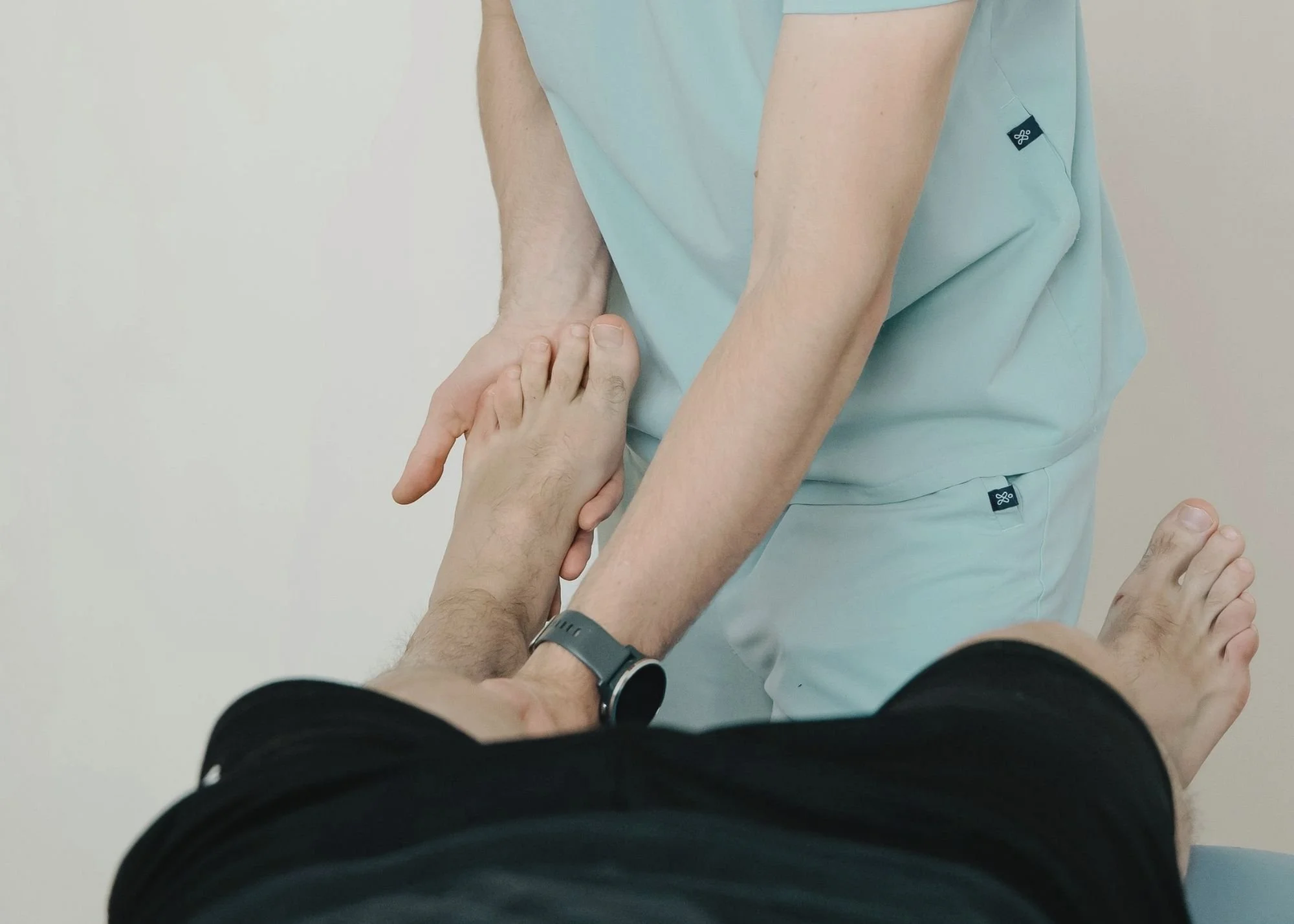
A common pattern in foot pain treatment: a patient comes in with heel pain. The standard treatments — rest, stretching, ice, anti-inflammatories — produce some improvement, but the pain keeps coming back. Months pass, treatments cycle through, and nothing produces lasting relief. Eventually, someone takes a closer look at how the patient actually walks. The heel pain isn't the problem; it's the symptom of a biomechanical issue happening above the foot, below the foot, or somewhere in the kinetic chain that's being overlooked.
This is why biomechanics matters in podiatry. The foot isn't an isolated structure — it's the foundation of a complex system that includes the ankle, knee, hip, pelvis, and spine. Understanding how those systems interact is the difference between treating symptoms and actually solving problems.
What Biomechanics Means
Biomechanics is the study of how the body moves — how forces, leverage, alignment, and timing interact to produce movement. In podiatry, biomechanics specifically refers to:
How the foot interacts with the ground during walking and running
How forces transfer through the foot, ankle, and lower leg
How the foot's structures (bones, joints, tendons, ligaments) work together
How abnormalities in any of these elements cascade through the body
How asymmetries between the two sides create compensatory patterns
Every step you take involves dozens of biomechanical events happening simultaneously. When they're all working correctly, you don't notice them. When something's off, the consequences can show up anywhere — feet, knees, hips, back, even neck and shoulders.
Why Foot Mechanics Affect More Than Feet
The kinetic chain principle: the body works as a connected system, and a problem at one link affects every other link.
Consider what happens when one foot overpronates excessively:
The foot rolls inward more than it should
The lower leg rotates internally to compensate
This rotation translates up to the knee
The knee experiences abnormal stress patterns
Hip alignment shifts to compensate
The pelvis tilts asymmetrically
The spine adjusts to the pelvic tilt
Even shoulder and neck position can be affected
A patient might come in complaining about knee pain, hip pain, or back pain — and the actual cause is happening at the foot. Effective treatment requires identifying the mechanical source, not just treating the painful area.
Common Biomechanical Issues
Overpronation
Excessive inward rolling of the foot during walking and running. Causes problems including plantar fasciitis, posterior tibial tendon dysfunction, knee pain, and hip issues.
Supination (Underpronation)
Insufficient inward rolling — the foot stays rigid and doesn't absorb shock effectively. Common in patients with high arches. Causes lateral foot pain, ankle instability, stress fractures, and IT band issues.
Leg Length Discrepancy
When one leg is functionally or anatomically longer than the other. Even small discrepancies (less than half an inch) can produce significant problems over time.
Limited Ankle Dorsiflexion
Tight calf muscles or restricted ankle motion changes how forces transfer through the foot. Linked to plantar fasciitis, Achilles problems, and forefoot overuse.
Hip Weakness
Weak hip stabilizers (especially the gluteus medius) cause compensatory patterns throughout the lower extremity. Common contributor to running injuries.
Asymmetric Movement Patterns
Differences between the two sides of the body — whether from injury, habit, or anatomic variation — create chronic stress on certain structures.
How Podiatrists Assess Biomechanics
A thorough biomechanical evaluation goes beyond looking at the foot:
Standing Assessment
Foot posture and alignment
Arch height and structure
Knee alignment
Pelvic level
Spinal alignment
Range of Motion Testing
Ankle dorsiflexion (with knee bent and straight)
Subtalar joint motion
Big toe joint motion
Hip rotation
Strength Testing
Foot intrinsics
Posterior tibial tendon strength
Hip abductors
Core stability
Gait Analysis
Watching how a patient actually walks reveals patterns that static examination can't. Many issues only become apparent during dynamic movement.
Visual gait observation
Treadmill analysis
Video analysis with slow-motion review
Pressure mapping technology in some practices
Force plate analysis when available
Why This Matters for Treatment
Effective treatment requires matching the intervention to the actual cause:
Custom orthotics. Properly designed orthotics address specific biomechanical problems — they're not just generic arch supports.
Targeted exercises. Strengthening specific weak structures or stretching specific tight areas.
Footwear recommendations. Specific shoe categories that complement the patient's biomechanics.
Activity modifications. Adjustments to training, work demands, or daily activities that aggravate the underlying problem.
Coordination with other providers. When biomechanical issues involve the broader kinetic chain, coordination with physical therapists, chiropractors, or other specialists may be appropriate.
Biomechanics in Sports
For active patients — particularly the running community of Boulder and the Front Range — biomechanical assessment is fundamental to sports medicine care. The same biomechanical issue that causes minor discomfort in a sedentary patient can be career-affecting for a competitive runner. Identifying and addressing biomechanical inefficiencies early makes a measurable difference in injury rates and performance.
Biomechanics Across the Lifespan
Biomechanical needs change with age:
Children's feet are still developing — assessment focuses on identifying issues that warrant intervention vs. normal variation
Adolescents and young adults benefit from optimization for athletic performance
Middle-aged patients often deal with the cumulative effects of long-standing biomechanical issues
Older adults face changing mechanics due to decreased flexibility, muscle mass, and balance
Effective biomechanical care meets patients where they are.
When to See a Podiatrist for Biomechanical Evaluation
Persistent foot pain despite conservative treatment
Recurring lower extremity injuries
Knee, hip, or back pain that other providers haven't resolved
Athletic underperformance you suspect is mechanical
Visible gait abnormalities
A new or worsening biomechanical issue (developing flat feet, leg length changes after injury)
Children with persistent walking abnormalities
Pre-event optimization for athletes
At Table Mountain Foot and Ankle, biomechanical assessment is foundational to how we approach patient care. Understanding why something hurts is the only way to fix it for good. Schedule an appointment for a thorough biomechanical evaluation.