
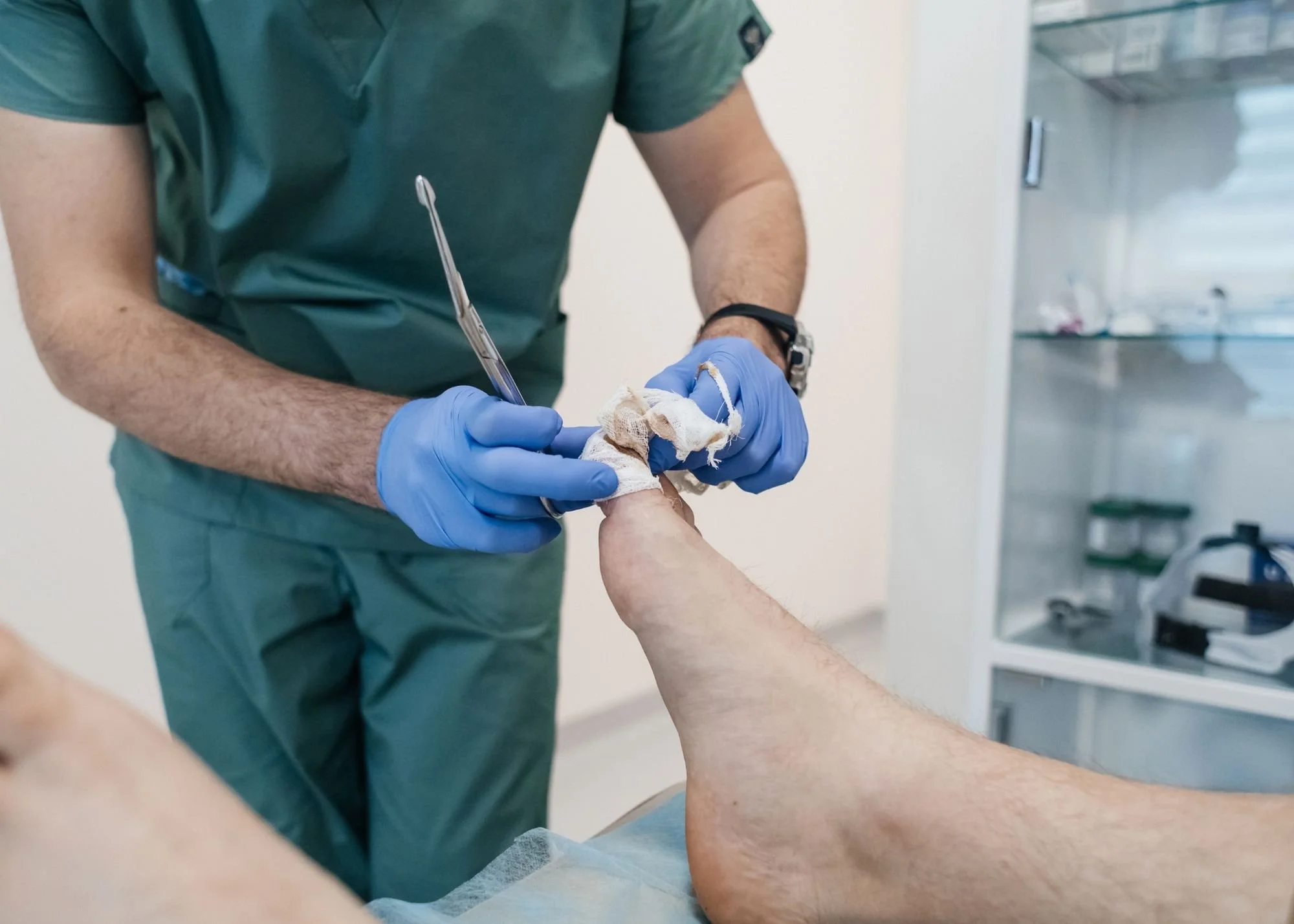
CONDITIONS WE TREAT
Foot & Ankle Care for the Life You're Living
Foot and ankle pain can come from dozens of different places — and the wrong diagnosis often means the wrong treatment. Our team takes the time to figure out what's actually going on, explain it in plain language, and build a plan around getting you back to the activities you care about most.

WHAT WE TREAT
Comprehensive care for the full range of foot and ankle conditions.
Your feet and ankles carry you through every mile of your life — which means when something goes wrong, it tends to affect everything else. At Table Mountain Foot & Ankle, we treat the most common foot and ankle conditions we see in active Colorado adults, families, and aging patients, along with the more complex cases that often get missed or misdiagnosed elsewhere. Below, you'll find the conditions we see most often, grouped by the part of the foot or ankle they affect. Don’t hesitate to give us a call for any and all ailments.
TOE & FOREFOOT
Forefoot conditions tend to start small and get worse over time. A little bump. A slightly crooked toe. A pinch that only happens in certain shoes. By the time most patients call, they've been putting up with it for years. Our team offers both conservative and surgical approaches — including Lapiplasty for bunion correction — so you can pick the path that fits your goals and your timeline.
Bunions, hammertoes, and the pain you can't jam into a shoe anymore.

HEEL & ARCH
When every step hurts from the moment you get out of bed
Heel pain is one of the most common reasons patients call our office. The good news: it's also one of the most treatable — if you get the right diagnosis. We help patients work through plantar fasciitis, heel spurs, arch pain, and a range of other heel conditions using conservative-first options, with advanced therapies available when they're needed.

ANKLE INJURIES
From acute sprains to chronic instability
Ankle injuries don't always heal the way they should. A sprain from a trail run two summers ago can turn into chronic instability. A missed fracture can turn into long-term pain. We evaluate acute and chronic ankle conditions with in-office digital imaging and build treatment plans that prioritize getting you back to the activities you love — safely.

STRUCTURAL & CHRONIC
The conditions that shape how you walk
Some foot and ankle problems aren't injuries — they're structural. Flat feet, fallen arches, arthritis, and chronic pain patterns need a different kind of care: longer-term, biomechanically informed, and often paired with custom orthotics. We take the time to understand how your feet move and how we can support them through the long haul.
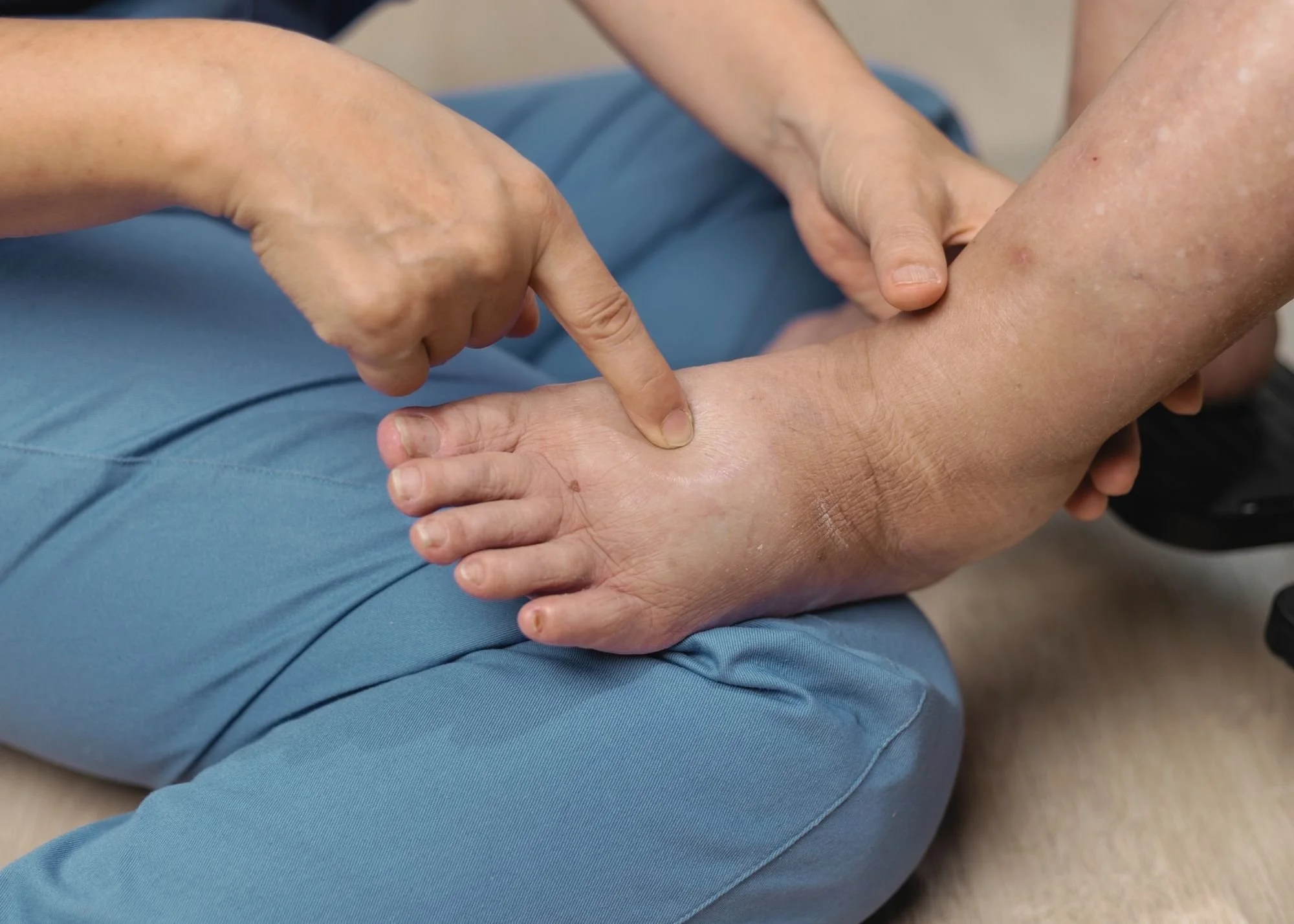
WHEN TO CALL
If it's been bothering you for more than two weeks, it's worth a call.
A good rule of thumb: if foot or ankle pain is changing how you walk, making you modify your activities, or lasting more than about two weeks, it's time to get it evaluated. Early evaluation almost always means more treatment options — and better outcomes. You should call sooner if you're experiencing any of the following:
☑ Persistent Pain: Discomfort that has lasted more than two weeks despite rest.
☑ Activity Changes: You are modifying your gait or skipping activities you enjoy.
☑ Visible Changes: New swelling, redness, or a change in the shape of a toe or joint.
☑ Healing Delays: Any minor cut or sore that isn't healing (critical for diabetic patients).
☑ Nerve Symptoms: Unusual numbness, tingling, or "pins and needles" in your feet.

how it works
Three simple steps to get you moving again.
STEP 1
Call to schedule
Pick the office that's most convenient — Wheat Ridge or Boulder — and call to book. We answer the phone. New patients are always welcome, and most insurance plans are accepted.
01
STEP 2
Come in for a thoughtful evaluation
Your first visit is a conversation, not a conveyor belt. We listen to your history, examine what's going on, and use in-office digital X-rays or musculoskeletal ultrasound if we need a closer look.
02
STEP 3
Start a plan built around you
You'll leave understanding your condition, your options, and exactly what the next step looks like. No pressure, no upsell — just steady care.
03
Conservative-first, surgery when it's the right answer.
HOW WE TREAT
Our treatment philosophy is simple: we explore the least invasive options that can actually solve your problem before considering surgery. That often means custom orthotics, targeted physical therapy referrals, injections, laser therapy, shockwave therapy, or changes to footwear and activity.
When surgery is the right answer — for severe bunions, chronic instability, or structural problems that can't be addressed any other way — our board-certified surgeons have the experience and credentials to handle it. We'll walk you through every option and every outcome before anything gets scheduled.
COMMON QUESTIONS
Common Questions About Conditions
-
Most cases of plantar fasciitis improve with conservative treatment and do not require surgery. Stretching, supportive footwear, custom orthotics, physical therapy referrals, and targeted in-office therapies like MLS laser or shockwave resolve the majority of cases — sometimes within weeks, sometimes over several months. Surgery is reserved for a small number of patients whose symptoms haven’t responded to extended conservative care. Getting an accurate diagnosis early gives you the best chance of avoiding it.
-
Podiatrists specialize exclusively in the foot, ankle, and lower leg — it’s their entire focus, not a subspecialty. Orthopedic surgeons treat the entire musculoskeletal system. For most foot and ankle conditions, a board-certified podiatrist is the most direct path to diagnosis and treatment. TMFA’s doctors are board-certified in foot and ankle surgery and bring decades of foot-specific clinical experience to every case.
-
Our philosophy is "conservative care first." We successfully treat the vast majority of our patients using non-surgical methods like custom orthotics, laser therapy, or specialized injections. Surgery is typically only discussed if these options haven't provided the relief you need to stay active and pain-free.
-
It is almost never too late. Many of our patients come to us after "living with" chronic pain for a decade or more. Even if a condition has become structural (like a long-term bunion or arthritis), we have advanced regenerative therapies and modern surgical techniques that can significantly reduce pain and improve mobility, regardless of how long it’s been bothering you.
-
Absolutely. We believe foot and ankle health is part of your total body wellness. If you are already working with a physical therapist, trainer, or a primary care physician, we are happy to share our findings and digital imaging with them. This ensures your entire care team is on the same page for your recovery and long-term health.

READY WHEN YOU ARE
Call to schedule your visit.
We see patients from across the Denver metro area at our Wheat Ridge and Boulder offices. Both locations are accepting new patients, and both offer free parking. Call whichever office is most convenient — we'll take it from there.